The Research & Writing of Louis A. DeCaro Jr.


"The world needed John Brown and John Brown came, and time will do him justice." Frederick Douglass (1886)

Search This Blog & Links

Translate

Thursday, April 07, 2011

Poetry-
"Chanted by Dusky Millions": A Poem by Georgia Douglas Johnson (1922)
Georgia Douglas Johnson
(c. 1877-1966)
Schomburg Center image


To John Brown


We lift a song to you across the day
Which bears through travailing the seed you spread
In terror's morning, flung with fingers red
In blood of tyrants, who debarred the way
To Freedom's dawning. Hearken to the lay
Chanted by dusky millions, soft and mellow-keyed,
In minor measure, Martyr of the Freed,
A song of memory across the day.
Truth cannot perish through the earth erase
The royal signals, leaving not a trace,
And time stil burgeoneth the fertile seed,
Though he is crucified who wrought the deed:
O Alleghanies, fold him to your breast
Until the judgment! Sentinel his rest!

Georgia Douglas Johnson was a notable figure of the Harlem Renaissance.  Her birth date is uncertain, some sources placing it at around 1877 and others at 1880.  This poem appeared in her book, Bronze (1922, p. 89), which includes a preface by Brown biographer, W. E. B. DuBois (and a poem in his honor too).  Johnson's "John Brown" was also featured the same year in The Crisis (August 1922).  My transcript is from Benjamin Quarles, Blacks on John Brown (1972), reprinted by DaCapo Press with Allies For Freedom (1974) in one volume (2001).  

Wednesday, April 06, 2011

Hendrix in the (mid)West--
John Brown Artist/Author's Latest Effort is a Civil War Story

ST. LOUIS - Nurse, Soldier, Spy, a fast-moving story of the Civil War, offers a mix of history, adventure and "old-fashioned girl power," artist John Hendrix says.

Nurse tells the true tale of teenager Sarah Emma Edmonds, who dressed as a man and enlisted in the Union Army under the name Frank Thompson. Thompson rescued the wounded on battlefields, nursed their wounds and served as a spy, disguising herself as a slave to get behind Confederate lines.

After illustrating Abe Lincoln Crossing a Creek: A Tall Thin Tale in 2008 and writing and illustrating the acclaimed John Brown: His Fight for Freedom in 2009, Hendrix, of University City, Mo., was offered Nurse, Soldier, Spy just in time for the 150th anniversary of the Civil War's start. He says he was a little concerned that he was getting stereotyped as "a Civil War nut."

"My first reaction was, oh man, do I want to do another Civil War work?" he says. "But I'd just finished 'John Brown,' and I'd done a lot of research on the era - I had my head in it. I like history. I probably like the Civil War more than I'd like to admit. It worked out well."  His artwork complements Marissa Moss' story of Edmonds, one of hundreds of women who dressed as men on both sides in the war, often serving with courage and distinction. But Edmonds was the only one to receive an honorable discharge and a pension.

Hendrix found it a sympathetic story.  "She took great risks for really no personal gain, other than giving meaning to her life and her work," he says.

Hendrix, 34, is a St. Louis native who grew up in Des Peres, Mo. After graduating from the University of Kansas, he got his master's of fine arts degree and a lot of valuable experience at New York City's School of Visual Arts.

Hendrix and his wife, Andrea, whom he met in high school, have two children: Jack, 5, and Annie, 2. He does covers for magazines ranging from Sports Illustrated to Christianity Today, op-ed art for The New York Times and illustrations for publications ranging from PC World to Runner's World.

Hendrix's style is audacious and colorful. Nurse, Soldier, Spy uses the distinctive typography of the period to make its most important points: When "Frank" is asked if she'll spy, the words "I'm your man!" are as big and bold as a recruiting poster.

The figures are a little cartoonish, with disproportionately large heads. But "that's my editorial style," Hendrix says. "I try to draw expressively, not photorealistically. (Frank) will sort of change scales, depending on her role" in a given illustration.

He used the same style for "John Brown" and "Abe Lincoln."

One of his favorite jobs is doing the visual research, tracking down the details of uniforms and weaponry. In "John Brown," the abolitionist holds the rifle he actually had at the Harper's Ferry raid. Uniforms, he says, are harder. The armies "started out really regimented. As things progressed, they didn't have the resources to keep things together. By the end, the Confederates looked really awful."

Drawing Sarah/Frank was a tough assignment: She had to look like a tomboy, like a tough kid, but she needed some womanly touches. She was "a really interesting character. We only have three pictures of her from the era. In two of them, she looks like Frank. In one, she's dressed like a woman. She could pass as a young boy, which she did. She had small feet. She probably wore extra socks."

For his next book, Hendrix has left behind the Civil War, if not the 19th century. A Boy Called Dickens is due early next year. Marking the 200th anniversary of Charles Dickens' birth, it will explore the sometimes dark boyhood of one of the most successful authors of all time.

"There's so much of his experiences in his work," says Hendrix, who's working in a heavier style to capture the grim settings of debtors prisons and factories. "I think it makes a good read."
The books are more than just good reads, though.

"Why do we value the things that we value?" he asks. "When is it a good time to make a choice that is difficult? I don't see these books as just history books. They deal with moral ambiguity."

Nurse, Soldier, Spy by Marissa Moss; illustrated by John Hendrix; Abrams (48 pages, $18.95; ages 9 to 12)

Source: Sarah Bryan Miller.  "Artist uses an expressive drawing style in book about a Union spy." St. Louis Post-Dispatch (6 April 2011)

Tuesday, April 05, 2011

Honors and Events--
East and West

Honors to Henry Robert Burke, Underground Railroad historian of southeastern Ohio .

April 2 marked the opening day for the season at the Belpre Historical Society’s Farmers’ Castle Museum Education Center , where a Southeastern Underground Railroad exhibit based on Henry R. Burke’s research is a permanent part of the museum’s collections. His extensive publications, which include detailed maps of his original design in the manner of William Seibert, are seen on his website Links to the Past, www.henryrobertburke.com. Henry’s recent honors include a lifetime achievement award in researching African American history from the Washington County (Ohio) Historical Society. He is a member of the Sons of the American Revolution and the Sons of Civil War Veterans.

Friends on Facebook have created an Underground Railroad group co-administrated by Henry Robert Burke, Art Thomas, and Bennie J. McRae. It is open for anyone to join.

Honors to Alice Louise Cook Hunt, the closest living relative of John and Mary Brown, on her 95th birthday, March 27, 2011. Mrs. Hunt, who lives in Oregon, recently restored the gravestone of her grandmother, Annie Brown Adams at the Old Pioneer Cemetery in Rohnerville , California . Her friend Don Bumgarner sent photographs of the honoree and the restored grave, which may be seen on www.alliesforfreedom.org/Annie_Brown_page.html. You’ll also find photographs of Alice Keesey Mecoy, who was named for her great-aunt, and is now the family historian.

Mary Brown’s birthday party at the Saratoga Community Library on April 15, 2011 will honor Mrs. Hunt’s 95th birthday with her nephew, Paul Keesey of Santa Clara . It is the 195th anniversary of the birth of Mary Brown, wife of John Brown of Harpers Ferry, who is buried at the Madronia Cemetery in Saratoga . If you would like to see a short slide show presentation by Jean Libby about Mary and Her Daughters, a documentary project being launched at the event on April 15, visit the San Jose Mercury calendar announcement: http://events.mercurynews.com/saratoga-ca/events/show/177228945-mary-browns-birthday-party. The show will disappear from the site after the event.

Congratulations to the Black Jack Battlefield & Nature Park Trust in Baldwin City, Kansas who have created an outstanding website and downloadable brochures and a splendid historical map as well as of their activities and facilities, www.blackjackbattlefield.org Their brochure is funded by the Kansas Humanities Council. Upcoming events include John Brown Day on May 7, and a major celebration and re-enactment of the Battle of Black Jack (winner: John Brown) of June 2, 1856.

Opening Event: May 7, 2011 (John Brown’s 211th birthday is May 9)
LOCATION: Black Jack Battlefield & Nature Park
TIME: 1:00 p.m.
COST: Free
Visit us opening day as the tour season kicks off when John Brown gives a guided tour of the battlefield.
Learn the history behind John Brown, the Battle of Black Jack, Bleeding Kansas, and the role that the Santa Fe Trail played in what some argue is the first battle of the American Civil War.
1 p.m. tours on Saturdays and Sundays continue until October 16th.
June 2nd, Thursday - Dawn at Black Jack Battlefield
LOCATION: Black Jack Battlefield & Nature Park
TIME: 5:00 a.m. - arrive by 4:45 a.m.
COST: Free
Walk the Black Jack Battlefield at the exact day and time of the battle, 155 years later.
The guided tour will begin at the Robert Hall Pearson farmstead home.

June 2nd, 2011 Thursday - John Brown, Martyr or Madman? Reader's Theater
LOCATION: Lumberyard Arts Center, 718 High Street, Baldwin City, KS
TIME: 7 - 9:00 p.m.
COST: Free
Refreshments provided

7-7:30 p.m.. St. Luke's AME Church Choir
Hear the choir from St. Luke's AME Church in Lawrence sing the songs that helped keep hope alive in
America 's enslaved people.
Stay for the Reader's Theater to follow.

TIME: 7:30-9 p.m. - Reader's Theater
In commemoration of the 150th anniversary of the start of the Civil War and the recognition of events that occurred in Kansas and Missouri during this period in history by using reader’s theater script prepared by the Kansas Humanities Council reflecting both the Kansas and Missouri perspectives. These voices from history provide insight into how 19thcentury Americans struggled with determining the future of our nation and defining the meaning of freedom.
June 4th, Saturday - John Brown's Battle at Black Jack
.... dawn of the Civil War
LOCATION: Black Jack Battlefield & Nature Park
TIME: Gate opens at 9:00 a.m. - closes at 7:00 p.m.
COST: Adults $8 / children over 3, $1
A commemoration of the 155th Anniversary of the Battle of Black Jack.
Three professional reenactments: 11:00 a.m., 2:30 p.m., and 5:30 p.m..
live period music * historic artifacts * first-person historic presenters * children's activities
nature park walks * vendors/crafters/sutlers * period demonstrations * food & drink

Thanks to the friendly Kansas people who sent printed materials to share in California, and the many friends of Henry Robert Burke on Facebook.

Jean Libby
Allies for Freedom
www.alliesforfreedom.org

Sunday, April 03, 2011

Read At Your Own Risk--
Body Slam: The Pottawatomie Killings as an Anti-Bully Episode


My wife recently showed me a You Tube video that she saw on facebook, where a kid was getting bully-punched and physically harassed until he became so fed up that he picked up the bully and body-slammed him. I never realized it, but You Tube has a bunch of such videos, some of them dramatized productions, others raw images of bullies getting knocked out and stomped. Apparently there is something deeply satisfying for many people to see a bully get his butt whipped.

Brown's Early Anti-Bullying

This got me thinking about the Old Man in Kansas, especially since I recently had a couple of days of going back and forth on Answer.com with someone who strongly objects to Brown and his role at Pottawatomie. In fact, seeing the You Tube video thus prompted me to think of the whole bloody Pottawatomie episode as an extension of John Brown’s perennial war on bullies. I’ve documented Brown’s anti-bully inclinations in John Brown—The Cost of Freedom, including two testimonies from his younger (half) siblings to the effect that Brown really disliked bullies from the time of his youth and was known to intervene on behalf of weak kids who were getting bullied by big kids. This apparently happened enough during his fitful, scanty school days to earn him the reputation of being an anti-bully. Certainly, his passion for the underdog obviously goes a long way toward understanding how Brown conducted himself throughout his life.

Nor did John Brown abandon his contempt for bullies when he became an adult. Around the time that he moved to northwestern Pennsylvania, he went to bat for settlers in that vicinity who were faced with eviction by a big land company based in Philadelphia, earning the reputation of a troublemaker by one of the firm’s agents. As a settler, he once warned some white men who were going to harass local Native Americans that he would just as soon shoot them then join them. Similarly, in the 1840s, after working among wool growers for a number of years, he concluded that these farmers in Ohio, Pennsylvania, and western Virginia were being victimized by rich manufacturers in New England, particularly since the latter were fixing the prices of wool to their own advantage. As a result, Brown organized a wool commission operation with the backing of Simon Perkins Jr. of Akron, Ohio. The Perkins & Brown firm opened its operation in Massachusetts in 1846 with the specific intention of empowering woolgrowers. By grading and pricing the wools on their behalf, he introduced quality controls and sought to give a measure of self-determination to the growers. While the firm ultimately failed, it was probably more as a result of the unified efforts of the manufacturers to undermine its operation than Brown’s alleged poor business abilities. The point is that the New England wool manufacturers were bullies and John Brown hated bullies, whether they were big, scary thugs in the schoolyard or rich industrialists and businessmen taking advantage of settlers and farmers.

Slavery the Bully

Needless to say, John Brown fought for black people in a variety of ways, first by using every non-violent means necessary—up until the Fugitive Slave Law of 1850 was passed into law. Then he organized blacks in Springfield, Mass., in a resistance group and tried to arm them. Viscerally, he was just doing what he had always done since his frontier school days. Of course there are political, social, and religious dimensions to everything Brown did in fighting slavery. But in one sense, his entire private war against slavery was one long anti-bully crusade.

When his sons and family went out to the Kansas territory in 1854 to settle, they surveyed lands given to Native Americans in an attempt to help them secure their boundaries against pro-slavery squatters from the South. In one case, Brown apparently sent his sons to remove one such squatter at gunpoint, something that the Native Americans could not have done given their politically powerless circumstances.

When John Brown went to Kansas in the fall of 1855, he did not go to settle, vote, or become a free state leader. He went to arm his sons and other free state settlers in the event of a violent assault initiated by pro-slavery thugs. In Kansas, Brown’s anti-bully inclinations were at the ready from October 1855 until the outbreak of pro-slavery terrorism took place in the spring of 1856. Until the latter took place, Brown never took any kind of action against the pro-slavery side; his correspondence shows that he was optimistic at first about the Territory entering the union as a free state based upon a fair vote. But in 1856 it increasingly became aware that the pro-slavery side was willing to turn to fraud and terror in order to defeat the free state majority and make Kansas into a slave state. When his worst fears came true, Brown went on the defensive. Five free state people were killed in various situations and pro-slavery “hordes” (as he called them) began to threaten assault upon free state communities. Brown and his sons made it clear that they would not succumb to pro-slavery bullying, either through the courts or by threats of blunt force. After facing of a pro-slavery judge with success, Brown and his family were marked as dangerous enemies by the pro-slavery side, and their pronounced pro-black politics readily distinguished them among the more conservative white free state settlers. They were soon marked for assault.

Pottawatomie

Although Pottawatomie is typically portrayed as a “massacre” of “unarmed” pro-slavery people, the reality is that Brown never bothered pro-slavery people. He was law abiding and was willing to respect the Popular Sovereignty doctrine, believing that the free state side would easily win the state by ballot. He was right, except the pro-slavery side had no intention of letting Kansas enter the union as a free state, and they were determined to use any means necessary to secure the new state as a place for slavery, even if the majority had to be suppressed with threats and terrorism.

When the free state town of Lawrence was attacked in late May 1856, five free state men had already been murdered in different episodes. Armed mobs of pro-slavery racists with banners like “The Supremacy of the White Race” were riding into the Territory and their intentions were not democratic. It was no surprise that the Browns were marked for assault and when the Old Man learned that local pro-slavery activists were involved in a conspiracy to bring these “hordes” down upon his family, Brown rose up like the quintessential anti-bully. He had not come to Kansas to settle, but to protect his family.

The Pottawatomie killings are terrible to contemplate. But most people who talk about them don’t consider that there was an unofficial civil war going on in Kansas in May 1856. Not only was their a civil war going on, but the federal government was not intervening to enforce the rights of the free state majority, since the powers of that era were in the lap of the pro-slavery politicians, including Presidents Pierce and Buchanan. The lawlessness of the hour was absolute; there was no protection from federal, territorial, or local officials. Free state people were like the proverbial fish in a barrel—easy to shoot.

With terrorism off the hook in Kansas, John Brown did not explode in rage. Based upon the names of certain men that he had received from free state associates, he conducted his own investigation and found that these men were actually determined to lead an assault upon his family and other free state associates. Based upon everything that had taken place up to that point, he had every good reason to believe that he and his sons would have been killed, and their women folk and children driven off by sheer terrorism.

Responding to Real Threats

People flinch at how horrible Brown was to conduct such a cold-blooded attack, but Brown was not the bully. He was the man who stood up to the bully. Brown attacked these men because Lawrence had fallen and he had good reason to believe that Osawatomie and the Browns in particular were next on the list of terrorist assault. There was a large group of pro-slavery thugs in the vicinity. Three of the men on his hit list were collaborating with them and Brown himself had spied on them and found this to be true. Brown did not attack on the basis of empty threats made by big, drunken pro-slavery blow bags. He knew that given the political situation, their threats were grounded in real determination to overthrow free state people, especially “those damned Browns” (as one called them), whose belief in black equality was just too much for these racist thugs to tolerate.

This was how the Pottawatomie killings came about. Brown believed something had to be done and basically no one was willing to do anything about it. Brown believed this was first a matter of his family’s well being, and he wasn’t about to let these thugs hurt his sons, daughters-in-law, and family. The pro-slavery faction had bullied and abused, destroyed and murdered, and no one had stood up to them. Free state people shuddered and prayed, refusing to use “violence” in self-defense, and naively trusting in the federal government to do the right thing. John Brown knew better.

The Pottawatomie strike was weighed, strategic, and harsh. It was not about scaring people. It was about squashing the worst kind of bullies and making sure they did not rise up again. When he took old man Doyle out of the house at gunpoint, along with his two sons, Brown was laying hold of the man who was his complete antithesis. Doyle was a Tennessean father and husband who had gone to Kansas to settle after working as a slave patrol in the South. He was not a slave holder, but he had made a living hunting black people down like dogs and forcing them back into chains. Doyle was a father, but he had no qualms about seeing John Brown and his sons killed. If he had had his way, it would have been the Brown cabins that would have been invaded with violence and murder. Salmon Brown clearly remembered Mahala Doyle, this man’s wife, tearfully scolding her husband as he went out of the door for the last time, reminding him that she had warned him about his “devilment.”

What was Doyle’s “devilment?” It was his conspiracy to bring a violent assault upon the Brown family. It was his intention to bring the force of pro-slavery terrorists upon John Brown and his sons, leaving their wives as widows.

The Bully's Mistake

After the Doyles were hacked to death with swords, it seems that old man Doyle was the one that Brown contemplated. He stood over the body of the Tennessean who had conspired to kill his family. Perhaps he looked into his face and feared that the man was still alive. Perhaps not. Whether to make sure he was dead or to signal to the others, Brown fired one shot into the head of the corpse—the only actual act of violence that he committed that dreadful night. I suspect he was also making a point in his own mind. Old man Doyle hadn’t realized it, but he had started something that John Brown had determined to finish. He was a father; he should have known better than to threaten another father's family. He should have reared his sons to be just men, not thugs. Doyle had mistakenly assumed that all free state people were going to be led like lambs to the slaughter. He hadn’t counted on what John Brown might do.

Bullies never count the cost. They assume that their “strength” and ability to use force and intimidation, even violence, will not be met with resistance. They assume the weakness of good people, and they count on fear scattering the weak like sheep without a shepherd. In their wildest imaginations, bullies never imagine that violence, like a sword, can be wielded as ruthlessly by a certain kind of well-intended man. And they never count on meeting such a man. Like Goliath overshadowing David, they simply cannot imagine just how bad things are about to get.

Body slam.

Saturday, April 02, 2011

Looking Back:
Jason Brown at Harper's Ferry Fifty Years Later


Jason Brown (1823-1912), was the second son of John Brown and Dianthe Lusk Brown, married to Ellen Sherbondy (1847).  He was known in the family as gentle, mild-mannered, and very sensitive.  He refused to participate in "the Pottawatomie killings," a preemptive counter-terrorist assault led by his father in Kansas in 1856.  However, he admitted to sharpening the swords that were used to kill the five conspirators (Doyles, Sherman, Wilkinson) who were known to have been directly involved in a plot to aid invading pro-slavery thugs with the intention of directing an attack on the Browns because of their adamant abolitionist stance in the territory.  Although Jason fought by his father's side in subsequent opposition to pro-slavery forces in Kansas, he returned to Ohio and thereafter refused to participate in any further militant actions against slavery.  Jason did not follow his father to Virginia, and was in Ohio at the time of the Harper's Ferry raid.  His son Charles later remembered how Jason wept at the news of his father's hanging in Virginia.  Subsequently, Jason lived for a time in California with his brother Owen.  In correspondence, he stated that he had lost many of his personal possessions--including his father's valuable correspondence--in a number of unfortunate house fires, including the burning of his home by pro-slavery thugs prior to his return to the east.  The brief article above is found in The Washington Times [Washington, D.C.], November 16, 1909, page 3.  It interestingly notes that Jason finally went to Harper's Ferry, also visiting Storer College, an African American institution then in operation.  The article says Jason was eighty-years-old, but actually he was eighty-six-years-old at the time.

Wednesday, March 30, 2011

In the News:
John Brown and Optical Character Recognition

The New York Times (March 28) features a story in the science section about John Brown’s speech before the Virginia court that sentenced him to death on November 2, 1859. The article, written by Ray Gugliotta, points out how the Times hired a Pittsburgh-based technology firm to put the newspaper archive into a searchable data base, a seven-year project that finally will be completed at the end of 2011.

As an example of this technological development, Gugliotta points out how Brown’s speech to the court was originally published in its entirety in the Times on the following day, November 3, 1859. Of course, the original print text shows “print unevenness,” smudges, and variations in how the same letter appeared—none of which prevented the human eye from reading with ease. The same is not true for optical character recognition (OCR), which could not read the text without making considerable confusion and error.

Gugliotta follows convention in stating that Brown’s “defiant yet humble words transformed” him from a man notorious “for the grisly murders of pro-slavery settlers in Kansas, into a martyr for the anti-slavery cause.” This is only partially true. First, Brown’s leadership in the Pottawatomie killings of 1856 were not known widely and therefore he was not “notorious” in the eyes of the North, but rather something of a heroic figure to the free state cause. Second, although Brown’s speech to the court made a great impact in winning the sympathy of the North at the time, his speech was actually the beginning of his impact in print, since his correspondence was published throughout the months of November and well into December. Brown’s letters to friends, family, and strangers propelled him to the zenith of his popularity as a martyr figure following the dynamic “life off” provided by his speech. Nor did the sum of Brown’s words mark his own transformation as much as they did the transformation of the North itself. It is a hackneyed assumption that Brown changed, or that he somehow manufactured his own transformation—or “reinvented himself.” This is to read him wrongly. The man who gave the speech in court and the man who wrote many letters expressing his convictions about slavery and willingness to die for the cause of freedom, was the same man who had herded sheep in Ohio, cleared vast acres in Pennsylvania, opposed the abuses of wool manufacturers in New England, and armed blacks in opposition to the Fugitive Slave Law. It was not Brown who changed, but rather the nation that caught only a glimpse of his brilliant vision.

As the great Frederick Douglass later wrote: “John Brown, Saw Slavery through no mist or cloud, but in a light of infinite brightness, which left no one of its ten thousand horrors concealed."

This was no self-made martyr or contrived reinvention. It was the final and fullest stage of Brown’s sojourn to be sure. Yet he was not transformed; it was his words that transformed the North, and helped to drive the Slave South to the brink of Pharaoh’s desperate lust to keep his slaves and even expand the territory of slavery.

Some day, if they are well educated, school children will prefer memorizing Brown’s speech to the court before they learn Lincoln’s Gettysburg Address. And if they download it from the digitized New York Times, a paper that was neither a friend to Brown nor to the slave, it will be all the better.

Monday, March 28, 2011

How the Massas Miseducated the Masses:
The Sentimentalizing of Slavery in Film

One of the reasons that "mainstream culture" in the U.S. seems indifferent to our nation's ruthless history of chattel slavery is that people have been miseducated for generations, especially in the age of cinema and television. For years, Hollywood either ignored or sentimentalized black chattel slavery. Anyone with even a basic knowledge of the history of cinema knows that the majority of Civil War films have either portrayed slaveholding society as essentially noble, or made the pro-slavery South appear as victims of Northern villains. In fact, most films in this genre portray the Southern slave master as heroic, and when enslaved blacks are portrayed, they are either made to appear benign or loyal to the master. Those of us who saw the "Roots" series on television when it was first aired know how dramatic it was, in part, because we had never seen a film portrayal of slavery from the black perspective. Yet "Roots" stands in stark contrast to a vast amount of propagandistic films that tell the story of slavery and the Civil War from a stylized, sentimentalized viewpoint that is either pro-Confederate or reductionist, making the Civil War into a white-on-white conflict with no political implications regarding racism and white supremacy.

"The Undefeated" is a 1969 western featuring John Wayne as Union officer Col. John Henry Thomas, and Rock Hudson as Col. James Langdon, a Confederate officer and slave holder who would rather burn down his plantation mansion than to sell his land to northern carpetbaggers. Within the first half hour of the movie, however, it is quite clear what version of the history of slavery and the Civil War is assumed by the writer and, consequently, what propaganda is being fed to the viewer.

At the beginning of the film, Wayne's character defeats some rebel soldiers only to learn after the fact that Lee had surrendered to Grant three days before. When he speaks to the leading Confederate officer (played by film great Royal Dano), he is told that the Confederates--noble southern patriots that they are--already knew about the surrender but were still intent on fighting. After all, they were fighting for their land. The story thus puts the viewer in a position to admire such nobility and courage, when in reality the Confederacy extravagantly wasted the lives of many men in satisfaction of the powerful elite slave holders and their politicians designs to expand slave territory westward.


Worse, "The Undefeated" has Langdon (Hudson) leaving with his family and other rebels as their former slaves stand loyally assembled to see them off. In a gesture of magnanimity, Langdon turns to a gray-headed old man in the group and gives him a gold pocket watch of great sentimental value. As this scene unfolds, the music is tender and moving, and thus we are assured that in the long run, the slave master was kind and thoughtful after all. How nice that, after stealing the man's labor over many years, he was kind enough to give him a gold watch!  


(I apologize for the poor quality of this clip, but it was made hurriedly with no opportunity to reshoot)


Of course, the James Langdons of history, whether or not they were "kind" masters, were men whose wealth was premised upon the stolen labor of African people forcefully enslaved and suppressed by the omnipresent threat of terrorism. Slave masters were the original authors of the benign, loyal black slave mythology. It was completely inconvenient to their interests to acknowledge that enslaved black people actually despised their condition and would typically take any opportunity to run away that presented itself.  Indeed, the fact that Southern militia were born out of slave patrols, further suggests that Southern slave holding society lived in constant fear of insurrections, uprisings, and other violent resistance from oppressed blacks--and these took place far more than is typically represented in standard history books.  John Brown was not speculating when he entered the South; he knew that it would not be difficult to tap into a deep source of resistance in the black enslaved communities Southwide.  This is why it was also essential for the myth of John Brown's failure to attract "the slaves" to be standardized as history.

One should keep this in mind, particularly in the manner in which the story of the Harper's Ferry raid has often been told, whether in television documentaries and films or by scholarly lectures and publications. The myth that enslaved blacks were indifferent to John Brown's efforts in Virginia was itself a masterpiece of southern propaganda, from both the slave masters of Jefferson County as well as the pro-slavery, pro-Union journalistic artist, David Strother Hunter (Porte Crayon), who used his position to present Brown's efforts as a quixotic adventure.  Beware of any historian or documentary maker who continues to advance the notion of black indifference to Brown's efforts.  Those who put forth this myth are either too accepting of the status quo "scholarly" view, or they are invested in diminishing Brown's impact and importance.

The Frankenstein of the South:
Raymond Massey as John Brown in Santa Fe Trail
Regardless, were slavery in the U.S. presented as it really was, both in its greed, violence, and racism, as well as the condition and attitude of the enslaved who despised their oppression, our movies about the Civil War would have a decidedly different impact on our society. Perhaps it is no surprise that the screenplay for "The Undefeated" was written by James Lee Barrett, a native North Carolinian. This is not to say that the only lies about slavery have been spawned by Southerners. There are plenty of Northerners who have romanticized slavery and the Civil War sufficient to mislead the public. Still, it is no wonder that complement to the fiction of the benign slave master and the loyal slave is the portrayal of John Brown as a fanatical madman and ruthless extremist--especially with iconic, influential 1940 film, Santa Fe Trail, the screenplay of which was written by a native Virginian.

I've heard a few (white) people recently complain about how "history has been changed," because they are accustomed to the kind of propaganda and fluff upon which they were nurtured, especially in regard to the experience of non-whites in this nation. The reality is, much of what the nation as a whole has been taught for generations about slavery and the anti-slavery movement was biased, skewed, and misrepresentative of the realities of white supremacy in general and chattel slavery as the "peculiar institution."  Perhaps things are changing.  But even though there is a greater willingness to acknowledge that John Brown "was on the right side of history," we should still watch the extent to which he is treated with measured cynicism and likewise to what extent and in what manner chattel slavery and white supremacy are portrayed, especially in popular film.

Sunday, March 27, 2011

Contagious Example

"Captain John Brown, the 'marching-on Brown,' once said to Emerson that 'for a settler in a new country, one good believing man is worth a hundred, nay, worth a thousand men without character.' His example is so contagious, that all other men are directly and beneficially influenced by him, and he insensibly elevates and lifts them up to his own standard of energetic activity."
Excerpt from anonymous author, “Companionship and Example” (1884), transcribed on the website, Old and Sold: Over 35,000 Scholarly Articles.


Image: John Brown in Hudson, Ohio.  Daguerreotype made in late 1856 by an unknown photographer.  According to documentarian Jean Libby, it is a sixth plate daguerreotype (mirror view).  It is held in the Boston Atheneum (UTB-6, 5.4 broj (no. 1).  See Jean Libby, John Brown Photo Chronology: Catalogue of the Exhibition at Harpers Ferry 2009 (Palo Alto, Calif.: Allies for Freedom, 2009), pages 32-33. 

Thursday, March 24, 2011

Kansas News:
Osawatomie Notebook: Edward Payson Bridgeman, Kansas Associate of John Brown

Edward Payson Bridgeman Sr. was an Osawatomie pioneer who established land claims near what is now Osawatomie State Hospital in 1856. He witnessed parts of the Battle of Osawatomie and recounted his experiences in With John Brown in Kansas: the Battle Of Osawatomie (1915).
“In the spring of 1856, I went from my house in western Massachusetts to Kansas to give my influence and vote in behalf of the free-state cause,” Bridgeman wrote.

He reported that Brown and his men were a tough lot, but did not attack peaceful proslavery men. “The Border Ruffians were determined in their efforts,” he wrote. “A price was on John Brown’s head, dead or alive. He had a few men staunch and true. It was better for a man not to cross their path unless he was peaceably inclined.”

On the morning of Aug. 29, 1856, Bridgeman said, Brown’s men camped on his claim northeast of Osawatomie on the modern-day site of Osawatomie State Hospital. Brown “came with his faithful band and camped in the dooryard around our house,” he wrote. “They comprised some 20 to 25 men. They were a tired set of men, and at the edge of the evening, without any supper, they threw themselves on the ground and slept.”
Brown and his men were a tough lot, but did not attack peaceful proslavery men.
Bridgeman went on to describe Brown’s actions on Aug. 30, 1856, the day before the Battle of Osawatomie:
He was a stern visage man but kindly spoken and approachable, of strong will and determination, of indomitable purpose and withal, a deeply religious man. To illustrate: When we all turned in for the night, he, as was his custom, read a chapter in the Bible. He laid the book on the stairs. A candle was left burning, and I had the curiosity, after he had gone to bed, to look into the Bible. I noticed that the margins were written over with his comments, and lines were emphasized by interlineations, particularly in the gospels and the Psalms.
As the guerilla force ate breakfast on the morning of Aug. 30, Brown and his men were warned about the proslavery forces attack on Osawatomie. “I saw John Brown strap his knapsack on his back as he commanded his little band to ‘fall in,’ and hurriedly marched forward,” Bridgeman reported.

Bridgeman and his friend, Win Anthony, the brother of Susan B. Anthony, quickly joined them in the defense of Osawatomie. “Anthony and I waited only long enough to take the dishes off the fire when we each took a gun and followed on after,” Bridgeman wrote.

Edward Payson Bridgeman’s first time under fire was under the command of Brown, and he took his military experiences at the Battle of Osawatomie into the Civil War, during which he fought for the Union from 1862 to 1865. Brown’s abolitionist crusade played a part in preparing him for his service in the war, which Brown’s actions sparked.

— Grady Atwater is administrator of the John Brown State Historic Site

Source: Grady Atwater. "Pioneer Gives Insight On John Brown." Osawatomie Graphic [Osawatomie, Kan.]

Decoding John Brown Junior's Love Letter

PITTSBURG, KANSAS —A Pittsburg State University graduate student has found the key to several coded letters written by the son of abolitionist John Brown.

History Detective:
Bill Hoyt
(Pittsburg Morning Sun)
Bill Hoyt, an employee in Pitt State’s Advancement Services Office and a Pitt State alumnus, said he came across the coded letters, written by John Brown, Jr., the oldest son of the famous abolitionist, while doing research for his master’s thesis in history. The contents of the letters, which Brown, Jr., had sent to his wife, surprised him, he said.

The messages helped reveal details about the wartime life of the man who rode with the Kansas 7th Cavalry. They also surprised officials at the Kansas State Historical Society, who have decided to restrict access to the contents of the letters to adults only.

Hoyt said he came across the letters by chance while he was researching one of Brown, Jr.’s lieutenants, George Hoyt (no relation). The letters had recently been acquired by the KHS.

“I was going through the personal correspondence of a few members of the Kansas Seventh Cavalry, like Brown and Daniel Anthony (brother of Susan B. Anthony) when I hit on the Brown coded letters,” Hoyt said.

The letters, from John Brown, Jr., to his wife, Wealthy, are written in a numerical code and appear as columns of numbers. Hoyt said the coded letters had all been written around the time period in which he was interested — about 1861-62 — which motivated him to try to crack the code.

Finding the key to the 150-year-old mystery wasn’t as difficult as he expected, Hoyt said.

“It took the better part of a night,” he said.

Hoyt said the code is a simple letter/number replacement system based on descending even and ascending odd numbers. For example, start with A=24, B=22, C=20, and continue to L=2. Then go upwards with odd numbers. M=1, N=3, O=5, among others. 00 is a space filler to hide the existence of one-letter words. Each page begins in the bottom right-hand corner, goes up to the top of the page and then begins again at the bottom of the next column to the left.

“It had to be simple enough that his wife would be able to decode it, and that he could write it and produce letters any time, no matter where was,” Hoyt said.

The letters, he continued, have been authenticated, and they match the context and progression of a series of letters Brown, Jr. had written.

“As he was writing to her, he say ‘I’m going to tell you something secret,’ and then put it into code,” Hoyt said. The letters were decoded by a volunteer at the KHS who was given the key.

What the key revealed, Hoyt said, surprised him.

“What I was hoping to find was information about George Hoyt,” Hoyt said. “Wealthy Brown and George Hoyt knew each other and corresponded on occasion, so it would not have been out of place for John Brown, Jr., to mention Hoyt to his wife.”

Instead, Hoyt said he found missives between Brown, Jr., and his wife, as well as evidence of money problems and a strong desire to return home from the war. Brown, Jr. also showed the same intensity his father possessed.

“Basically, he really, really missed his wife,” Hoyt grinned. “I think the letters are better described as fiercely intimate, maybe even the 19th-century version of sexting. But he was also very interested in getting the war over. He had an intense love of home and wanted to get back.”

The letters are graphic enough, however, that the KHS decided against posting Hoyt’s key on its website in order to keep it out of the hands of school-age youngsters. Patrons 18 and older may access the key and the letters at the Historical Society’s reading room, however.

Hoyt said the letters didn’t provide much help with his thesis research, but he’s not disappointed.

“It’s exciting to solve a mystery this old and it does add to what we know about some significant historical characters,” Hoyt said. “One of things it does show us is that throughout history we see people doing great things, and we forget that they’re real people, just like us. They share the same concerns we do. Seeing the intimate details of John Brown’s life helps us to see the real person.”

Mike Kelley, chairman of the Department of History, Philosophy and Social Sciences, said research often takes people in directions they didn’t expect.

“Original research gets the blood pumping,” Kelley said.

Source: William Klusener, “PSU grad student breaks letters’ code.” Pittsburg Morning Sun [Pittsburg, Kan.], 24 March 2011.

Friday, March 18, 2011

Biographically Speaking:
Redpath's John Brown Books


James Redpath
(Wikimedia Commons)
James Redpath (1833-95) was the Scottish born reformer, abolitionist, and journalist who became a confidant of John Brown and the author of his first and authorized biography in 1860.  Redpath is referred to by his biographer John McKivigan as "the forgotten firebrand" of the 19th century.  Undoubtedly, Redpath is a fascinating figure whose contributions and influence upon the U.S. have largely gone overlooked.  According to McKivigan's bio description, Redpath
befriended John Brown, Samuel Clemens, and Henry George and, toward the end of his life, was a ghostwriter for Jefferson Davis. He advocated for abolition, civil rights, Irish nationalism, women's suffrage, and labor unions. . . . Redpath's newspaper writing is credited with popularizing the stenographic interview in the American press, and he can be studied as a prototype for later generations of newspaper writers who blended reportage with participation in reform movements. His influential biography of John Brown justified the use of violent actions in the service of abolitionism. Redpath was an important figure in the emerging professional entertainment industry in this country. Along with his friend P. T. Barnum, Redpath popularized the figure of the "impresario" in American culture. Redpath's unique combination of interests and talents—for politics, for journalism, for public relations—brought an entrepreneurial spirit to reform that blurred traditional lines between business and social activism and helped forge modern concepts of celebrity. 
Young Redpath in Kansas
(Random  Thoughts on History)
Redpath met Brown during his Kansas foray and actually dedicated his 1859 publication, The Roving Editor; or Talks with Slaves in the Southern States to the Old Man (It begins, "To you, Old Hero, I dedicate this record of my Talks with the Slaves in the Southern States. . . .")  This is especially interesting because he is referring to the John Brown he has encountered in Kansas prior to the Harper's Ferry raid.  This suggests that some historians have been too extreme in concluding that Brown would not have been remembered had he died during the Harper's Ferry raid instead of becoming a martyr on a Virginia gallows.  Clearly, Brown had a tremendous political and cultural impact upon the anti-slavery set at the time, and if he had died in the battle of Harper's Ferry, it is very likely we would still be talking about him to a significant degree. (By the way, see my friend Tim Talbott's excellent blog, Random Thoughts on History, in which he features this very dedication in his March 2 entry, including a transcript of the entire text.)


The following year, after the Harper's Ferry raid and Brown's execution, Redpath emerged as the official biographer with his highly influential work, The Public Life of Capt. John Brown (1860), which featured Brown's own 1857 autobiographical sketch for the first time, and provided sufficient royalties to Brown's widow for her to make additions and finishing touches to their North Elba farmhouse.  The same year, Redpath also published the important complement to his biography, Echoes of Harper's Ferry, in which he published a good many edited letters written to John Brown with the practical intention of raising money for the black raiders who had "recently went to Heaven via Harper's Ferry, or who were murdered, with legal forms, at Charlestown, Virginia."


The following year, 1861, Redpath published A Guide to Hayti, reflecting his work and close ties between blacks in the U.S. and the Haitian government, particularly in supporting black emigration to the black island state ("She offers you a home, a nationality, a future," Redpath thus wrote to U.S. blacks on behalf of Haiti).  Incidentally, Haiti paid great tribute to John Brown after his death, and John Brown Junior was a colleague of Redpath's in his Haitian endeavors.  Interestingly, at the publication of this Haitian volume, Redpath published an extensive pamphlet under the imprimatur of his Boston-based Haytian Bureau of Emigration that also featured his previous two John Brown books.  The pamphlet provides a solid ten pages of material pertaining to his bio of Brown and one page description of Echoes of Harper's Ferry.  As to the former, Redpath publishes a letter from John Brown Junior, followed by a Brown family letter (including the Old Man's younger brother Frederick as a signatory), authorizing and affirming Redpath as the official biographer of their late father.  Then there is an extensive listing of book reviews which makes for fascinating reading, especially since Redpath had the good humor to include negative reviews.  Here are two of my favorites: "Full of the fanaticism that led its subject to the scaffold," N.Y. Express; and "The well-known James Redpath is an Abolitionist of the darkest hue, and upholds every action of Brown. The book can do no harm," Montgomery Democrat.  Or so he thought.

All you JB fiends will love this.  I have provided the pages pertaining to his John Brown books and you can download them via dropbox.com by clicking here.

Tuesday, March 15, 2011

Ephemera:
Dust and Ashes: John Brown's Wagon

Source: The Los Angeles Herald (14 March 1908), p. 11

Saturday, March 12, 2011

Biography:
The Stutler-Boyer Disconnection

The preeminent John Brown documentary scholar and collector is Boyd B. Stutler, who died in 1970, and whose papers are now held in the archives of the State of West Virginia. Although Stutler intended to write a biography of Brown from the 1950s, the work was never completed. There are probably a number of reasons for what Stutler referred to as his “dalliance,” that proved to undermine his biographical effort. But it is also probably true that the rise of other John Brown writers in late 1950s and 1960s further discouraged him from completing his work. Most notable in this regard were Truman Nelson, Richard O. Boyer, and Stephen B. Oates, all of which brought notable works about John Brown to publication. Of these three, however, Richard O. Boyer’s correspondence with Stutler is the slightest in the Stutler Collection. Furthermore, of these three successful authors, Stutler—who was typically generous in his support of researchers—offered little or no assistance to Boyer.

[The complete entry is available only in the forthcoming book, John Brown: Emancipator]

Thursday, March 10, 2011

Mary Brown's Birthday Celebrated

It's Mary Brown's birthday April 15 at the Saratoga Community Library in California, 2 -4 p.m.

This is the inaugural event of "Mary and Her Daughters, a legacy of equality and cooperation" video and archives documentary project.

The direction is to situate the family of John Brown who settled in Santa Clara County in 1879--and where descendants still live today--in local communities of their interaction.

#1 African Americans who established the first secondary school for blacks in the West in San Jose and their relationship with John Brown's liberation movement

#2 Women's suffragists, successful in California in 1911, associated with Mary's daughters and Mary Brown in her journeys (also direct supporters of John Brown)

#3 Japanese farmworkers who were taught English by Sarah Brown, who protested racial discrimination toward Asians in California and learned the Japanese language and culture for her work.

Project Director Jean Libby will make a presentation about Mary Brown's life of activism for equality and cooperation.

Free and open to the public. Sponsored by the Saratoga Historical Foundation and Museum and the Saratoga Community Library.

With great appreciation for the support of the African American Heritage House at History Park in San Jose, especially Outreach Coordinator Robert Walker, and to the sponsors of Mary Brown's 195th birthday commemoration and planned future activities.

Jean Libby, editor
Allies for Freedom
www.alliesforfreedom.org

Saturday, March 05, 2011

Favorites:
“A Shepherd Without Doubt”: John Brown’s Letter Home, 1845

One of my favorite John Brown letters has nothing to do with abolitionism, the Underground Railroad, or the Harper’s Ferry raid. But it provides a kind of “snapshot” of the man as he was in 1845, and one that adds color and feeling to our sense of John Brown in his forty-sixth year. This letter was written ten years before he went to Kansas to defend his family from pro-slavery terrorists, and fourteen years before the Harper’s Ferry raid. In fact, it was written a year before Brown and Simon Perkins Jr. set up a wool commission operation in Springfield, Mass., in an effort to curb the abuses of wool manufacturers and empower wool growers (which included some black farmers) in the “west.” 

By the time this letter was written, he had already partnered with Perkins in Akron, Ohio, and was busily tending to the magnate's flock, which Brown had groomed and cultivated to the point of national notoriety (Perkins' flock was praised in farmers’ journals, etc.). In fact, it was during much of the 1840s that Brown traveled widely in the country, examining and purchasing livestock, and fairly well establishing his expertise as among the leading specialists in fine sheep and wool in the U.S. in the antebellum era. Of course, he was mixing anti-slavery talk and networking with Underground Railroad folks amidst all this wool business, and of course Underground Railroad work as the occasion arose.

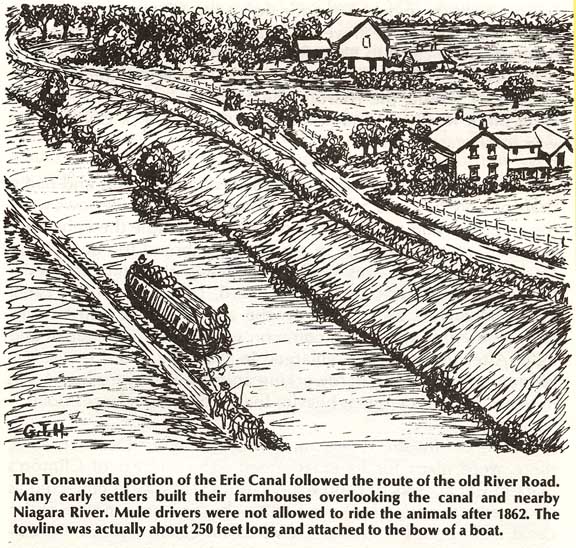
Erie Canal Boat in Western New York
This letter, written on November 25, 1845, provides little or no context, but we can surmise that he had made a business trip to the east, probably including his Connecticut home state, apparently to purchase sheep for the Perkins flock. There is a gap in his extant letters between May and November 1845, so we don’t know the exact nature or extent of this trip, but it must have taken him away from home for a few weeks if not longer.

What makes this letter particularly interesting is that he wrote it one week into his westward trip aboard an Erie Canal boat. Brown thus describes himself as being “wrap[p]ed up nice in a Buffalo skin,” in the “mid Ship” section, along with his sheep. In his famous 1857 letter to the son of “Secret Six” supporter, George L. Stearns, Brown would refer to himself as having been a “Practical Shepherd” in youth. Here he somewhat humorously refers to himself as a “Shepherd without doubt”; but his humor reminds us of his deep love for the labors and matters of sheep farming, and livestock in general. Brown studied sheep intensively and extensively, experimented in and improved upon medical cures for their ailments, and claimed to have known his sheep by face as we know people. However uncomfortable this setting may have been, then, it is difficult to imagine that Brown was unhappy--encamped among his flock in a mid-ship section of a 19th century canal boat, slowing moving across New York State in the chill of early winter.

Diagram of canal boat prior to 1850
(Ship Wreck World)
According to the website Ship Wreck World, canal boats in this period (pre-1850’s) were limited to 78-ft. in length due to the size of the original 90-ft. locks of the Erie and Oswego Canals. Canal vessels like the one Brown boarded were “line boats,” designed to carry freight, “but they also carried passengers as well as livestock.” Fare on line boats cost less than the fare for “packet boats,” which only carried passengers with hand-held luggage. Since travelers on line boats could set up tents and cook on deck,” we can imagine Brown naturally did so during this week-long trip. Ship Wreck World says line boats like Brown’s were slower than packet boats, covering about sixty-miles-per-day. 

This map excerpt shows the Erie Canal as it stretched
across New York state in Brown's era
Since they only ran during daylight hours, this explains further why it took Brown a week to get (most likely) from the eastern point of the Erie Canal near Troy, New York, to Union Mills, New York, which Brown himself sets at four miles from Buffalo.  Finally, according to John Percy, a historian of the Erie Canal, this historic waterway was only opened from late February through early December.* So Brown was cutting it close on this homeward trip. No wonder that he informs Mary that if he cannot get a “water passage” from Buffalo to Cleveland—that is, a steamship, he would herd the sheep on land until he could find a place to store them for the winter and then take a stage coach into Akron. However, he understandably did not want to herd the sheep along Lake Erie facing harsh winter elements, walking up to his knees in mud. Obviously, he had “been there and done that” in previous years, and preferred not to revisit such travail.

Brown assures Mary that he is well, and directs “the boys” to care for matters “at home,” which undoubtedly means both domestic chores as well as matters of the Perkins farm and flock. The “boys” here are 22-year-old Jason, 21-year-old Owen, and 15-year-old Frederick (the latter would be shot dead in Kansas in 1856). In the home were also 16-year-old Ruth, 10-year-old Watson, nine-year-old Salmon, and baby Amelia born in June that same year (she would die in a tragic household accident in October the following year, 1846)

The letter is found in the valuable Brown Family Collection held by the Henry Huntington LibraryManuscript Collections, in San Marino, California. The original spelling and format is preserved in my transcription below, including Brown's beloved ampersand in place of "and."


Canal Boat, Un[i]on Mills, 4 miles from Buffalo
Evening of 23d Nov 1845


Dear Mary


I have progressed thus far on my way
homeward verry well, but am at present weather bound
for a few hours at least. If things appears favour-
able when I get into Buffalo, I intend to take a
water passage to Cleaveland; but if otherwise I
think I shall drive the sheep I have untill I can
find some good place to leave them till the mud
freezes up, & take the Stage myself for home.
I cannot think of a much longer abscence at this
time nor of driving up the Lake through mud up
to my knees facing the rain, & snow together.
I am just going to try my Seventh night in the mid
Ship of a Canal boat, among the sheep (a Shepherd
without doubt) wraped up nice in a Buffalo skin
I trust the boys will take good care of all at home; &
hope to see you all well again shortly. My own
health is good, & hope you will not be over anx-
-ious on my account. If I get detained unexpect-
edly you may hear from me again


                                                 Affectionately Yours
                                                         John Brown


--------
      *John W. Percy, The Erie Canal: From Lockport to Buffalo (Partner’s Press, 1979; reprinted, Western New York Heritage Institute of Canisius Copyright 1993. ISBN 1-878097-09-1)