The Research & Writing of Louis A. DeCaro Jr.


"The world needed John Brown and John Brown came, and time will do him justice." Frederick Douglass (1886)

Search This Blog & Links

Translate

Monday, October 20, 2014

Proslavery artist Adalbert Volck's facetious
sketch of Brown as a saint
Biographically Speaking--
The Usefulness of "Panegyrics"

Many historians and scholars are quick to label the most famous 19th century biographies of the old man as panegyrics, meaning they are works of praise.  True enough, the 19th century biographies of Brown are works of praise--Redpath's 1860 authorized biography is certainly a panegyric, as are the later writings of Franklin B. Sanborn, one of Brown's close associates from the later 1850s. Even later in the 19th century, the aged Richard Hinton, another former Brown associate, wrote his book about the old man and his raiders.

Sketch of Sanborn
in youth
These works are generally branded as too adoring of Brown to be trusted as worthy historical works, and it is fairly typical of contemporary academics to treat them dismissively to some degree.  Another problem with these works, especially Redpath and Sanborn's respective works, is their reference to divine providence and so forth, which is a real no-no for contemporary scholarship.  While Sanborn was hardly an evangelical like his subject, he does seem to have believed that the phenomenon of John Brown signified some sort of divine providence in history.  Of course, none of this is acceptable by today's standards.  Whatever one may feel about some leader being a godsend, such thoughts are restricted to the realm of private faith and thought to have no place among professional historians.
Early photographic portrait
of James Redpath

There is no doubt that Redpath, Sanborn, and Hinton wrote works of praise; they also wrote works of apologia--works intended to defend Brown against his critics.  Furthermore, their works do have errors, mistakes, and suppositions that historians must check, correct, and recheck at times.  When Oswald Garrison Villard prepared his 1910 biography, he touted it as being objective and definitive, and privately scoffed at the aged Sanborn for being too admiring of Brown, as well as for his mistakes.

Richard Hinton
in later years
Villard is widely considered the first "modern" biography of Brown, and undoubtedly he was granted far more trust than he granted to others, including W.E.B. DuBois.  DuBois' biography of Brown preceded Villard's by one year, and Villard ruthlessly attacked his work in print, pointing out DuBois' mistakes and reliance upon less reliable sources.  What makes this more unfortunate is that poor DuBois had not even wanted to write a biography of Brown in the first place.  In fact, his work on Brown was really a third choice.  His first choice was to do a biography of Frederick Douglass, which was denied him because Booker T. Washington had his sights set on a Douglass book.  Then, DuBois turned to the idea of doing a biography of Nat Turner, which would have been a great contribution had he been permitted to execute the work.  Unfortunately, the Turner biography was also refused by his publisher.  John Brown, it is in many respects an excellent interpretation of the old man and well worth reading.
W.E.B. DuBois
Only then did DuBois turn to Brown as a subject, and when he did write his biography, he did so under great stress from his teaching and activism.  Furthermore, DuBois lacked the financial resources that rich Oswald Villard possessed.  Of course, despite the unreliability of many little details in DuBois'

On the other hand, Villard, the supposed fountainhead of objective John Brown scholarship in the 20th century, was really writing with an ax to grind--indeed a double ax.  Not only was Villard a fanatical pacifist who resented Brown's resort to "violence," but he was also the grandson of pacifist abolitionist great, William Lloyd Garrison.  It's not hard to sniff out the family vendetta in Villard's book.  Like his grandfather, Villard didn't seem to know whether he loved or hated Brown, and he concluded to write an appreciative sort of condemnation of the old man, calling him a murderer at Pottawatomie while elevating his martyrdom.   Villard's book was widely praised, although its worst side was what appealed so much to 20th century scholars, who subsequently used and abused Villard's take on Pottawatomie so much that it became the well-beaten path of almost any historical commentary on John Brown, often to this day.
Oswald G. Villard

In fact, Villard was biased.  His reading of the expansive data gathered by his assistant, Katherine Mayo, was selective and deliberate in its critical conclusions about Brown's supposedly unwarranted violence in Kansas.  Of course, anyone who reads carefully through that data (as I did years ago) knows that Villard's conclusions were hardly obvious.  He was simply writing with a predetermined conclusion of condemning Brown as a murderer, and he was quite persuasive.  Nor was Villard in the place of one worthy to cast the first stone when it came to scholarly errors.
Katherine Mayo

When Villard was an aged, sickly man, his work came under the careful and authoritative eye of Boyd B. Stutler, whose interest in John Brown had started in the 1920s.  Stutler, a native of West Virginia, started as a young newspaper man and a West Virginia history buff.  But the more he collected Brown's letters and built a library of other primary and secondary sources, the more he became pointedly interested in John Brown.  Prior to Villard's death, the author asked Stutler to go through his 1910 opus, and Stutler produced several pages of corrections, allowing Stutler to revise his work before dying.  It's too bad DuBois didn't know about this, or he might have had a few choice words for the merciless Villard.
Boyd B. Stutler
Despite a number of interesting works on Brown in the 20th century, nothing more of significance was written until 1969-70, when Stephen Oates published his landmark biography, To Purge This Land with Blood, and the playwright, Barrie Stavis, published his short but profound, John Brown: The Sword and the Word.  Stutler assisted both writers, but I think that he actually preferred Stavis' little book insofar as capturing the man who lived is concerned.  Unfortunately, Stavis' book didn't get much attention, while Oates' book became the standard for the rest of the 20th century.  

During the 20th century, Robert McGlone began his work on John Brown and seems to have intended to publish the next definitive response to Oates, although for some reason McGlone's work was not published until the 21st century, and by then he was already following on the heels of a number of new biographers.  His work is erudite and even magisterial to some degree, although he seems needlessly cynical at points.  More importantly, McGlone's work lacks the readability of Oates' plain text narrative, or the literary splendor of David Reynolds' 2005 blockbuster, John Brown Abolitionist.  
I'll refrain from going further with this little sketch, except to say a few things about the older works and their "usability."

As I noted above, there's a tendency to slap down Redpath, Sanborn, and Hinton immediately. Indeed, any book that is too warm toward Brown is accused either of being a panegyric or "hagiography" (a saint's life), and such works are all but disqualified in the contemporary realm of history writing.

There are a number of problems with this kind of bias:

While Redpath, Sanborn, and Hinton wrote in defense of Brown, and often quite adoringly with tones of hero worship, they were also primary witnesses who knew Brown and his context better than we do today.  Being part of the story doesn't mean you're objective, but it does mean that their witnesses are valuable, even if they have to be carefully weighed at times.  Their works have errors, but they also contain a wealth of information that biographers and students need.

As we can learn from Villard, "modern," "objective" scholarship is not reliable either.  There is a great deal of bias and prejudice against Brown in the academy.  Many writers who like to point out the "panegyrics" of the 19th century are actually prone to a cynical or polemical approach to Brown. The mainstay of much contemporary writing on John Brown is typically beset with baseless references to contemporary terrorism and violent characterizations of the man, although most writers (and this includes journalists too) know very little about John Brown.

The fact is, there is a great deal more anti-Brown writing on the shelves and on the internet than there are panegyrics, and some of the things labeled hagiography are simply appreciative of John Brown rather than negative characterizations.  When it comes to Brown, the language of contemporary scholars is full of regret, apprehension, even fear.  The cultural norm for writers, at least among "whites," is to approach John Brown with a reserve of suspicion, cynicism, or condemnation.

This aspect should be considered when the old dismissive reproach, "panegyric" is rolled out by the "experts."--LD

Wednesday, October 15, 2014

Er, Thank You, We Think. . .

Kenneth Mack on John Brown: Tipping His Hat, or Talkin' Smack?

I'm only a humble historian teaching at a small, fully accredited seminary, teaching a typically heavy load of courses because that's what small religious institutions tend to require of their faculties.  At our school, the administration packs us two professors to an office in order to save space, and puts us in fishbowl type circumstances so that anyone with any question can see us while we're working and knock on the door.  Sometimes I wonder what it's like to be an important professor--you know, the kind with an endowed chair and a professorial title (named after some rich, dead donor), teaching one or two courses a semester, along with a research assistant, and an office where you can actually close yourself in sufficiently to read and write.  (I do my serious work at home.)

Important Scholars

This wondering on my part becomes especially acute when I read the declarations, pronunciations, and opinions about John Brown that are issued forth from one or another important scholar, somewhere out there in the "high up on the hog" Academy.   Over the years I've noticed that high-class academics inhabit a higher echelon of discourse than the mass of humble academics, especially those of us in small institutions with hard-earned accreditation.   In their higher academic echelon, their books, articles, and opinions matter--the media seek them out and take their word for fact; and they take each other's words as fact.  Their discourse and research is exclusive--they quote each other, compete with each other, collaborate with each other, and tend to ignore everything and everyone else.  Now, this wouldn't be so bad if they actually were the most learned in their subject matter.

But as far as John Brown goes, at least, I can quite confidently say that they're not.

I don't want to seem harsh, but as an example, I reviewed a book by an Ivy League graduate a couple of years ago, the scholar now having moved onto a notable academic position, his resume replete with publications and columns in prestigious and notable journals and magazines.  The book he wrote on Brown was very poor, and although I handled it as gently as possible, his book was quite bad--riddled with errors, presumption, bias, and more bias.  To no surprise, the book was nominated for a prestigious historical award because this is the way his world works.  As a biographer, I never saw a work so fraught with mistakes and bias, although one or two Ivy League publications on Brown have come close.  Of course, my criticism probably was just ignored, because there is no actual dialogue with Mt. Olympus from down here.

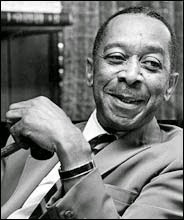
Professor Mack

Prof. Kenneth W. Mack
I was reminded of this reality this very evening, when I  read a blurb, ostensibly made on behalf of the Old Man by Kenneth W. Mack, whose academic title is "the inaugural Lawrence D. Biele Professor of Law at Harvard University, and the co-faculty leader of the Harvard Law School Program on Law and History."  By all accounts, Mack's Harvard website is impressive."  Representing the Race: The Creation of the Civil Rights Lawyer (Harvard University Press), was selected as a Top 50 Non-fiction Book of the Year by the Washington Post, was a National Book Festival Selection, was awarded honorable mention for the J. Willard Hurst Award by the Law and Society Association, and was a finalist for the Julia Ward Howe Book Award.  His is also the co-editor of The New Black: What Has Changed – And What Has Not – With Race in America (New Press, 2013)."  Pretty impressive.  Besides this, Mack is a columnist for many notable publications, and a talking head for PBS.
His research and writing have focused on the legal and constitutional history of American race relations. His 2012 book,

I will also add that Professor Mack is black, which makes his recent blurb on John Brown perhaps a bit more interesting.
"What the @#!!, Mack.  With 'help'
like that, who needs enemies?"

In the November 2014 online edition of The Atlantic, Mack is quoted among a number of other important scholars under the column, "The Big Question."  In this edition, the big question is, "Who is the most underrated politician in history?"  Mack's blurb reads:
An antislavery zealot and murderer who failed at everything he did in life, John Brown was executed for the ill-planned 1859 raid on Harpers Ferry. Everyone underestimated him, including the Virginia political leaders who made the mistake of putting him on trial, the platform he used to help bring on the Civil War.

The Company He Keeps

Taken at its best face, Mack's remarks seem to fall in the tradition of a number of other African American intellectuals, including Ralph Ellison, Kenneth Clark, and Benjamin Quarles, whose fealty to the white liberal establishment, blended with the black heritage of regard for Brown, produced a peculiar kind of loyalty to the old man.

Kenneth B. Clark
In Robert Penn Warren's 1965 book, Who Speaks for the Negro?, the white Southern writer interviewed the notable psychologist, Kenneth B. Clark, who seemed of two minds on the subject of John Brown.  While Clark held to Brown on one level, he too easily surrendered the old man to the liberal-racist Warren (who wrote an unworthy biography of Brown in the 1920s).  Clark compared Brown to Christ and Socrates, but also conceded that he was "mad," "neurotic," a "murderer," and a "fanatic" (see Who Speaks for the Negro?, pp. 318-21).  

Although writing two excellent books in appreciation of the African American, Benjamin Quarles declared Brown "warped in many ways" (Allies for Freedom, p. 197).  Ralph Ellison, also interviewed by Robert Penn Warren, similarly concluded that Brown was "demonic" rather than a "lunatic," but also "utterly impractical" and a "little off his beam." (Warren's interview with Ellison, 25 Feb. 1964, Ser. II, tape #1, p. 12, no. 030H42, RPWCR, 32, R.P. Warren Civil Rights Oral History Collection, Margaret I. King Library, University of Kentucky.  Trans. courtesy of Best Efforts, Inc.)

So, Professor Mack is standing on the stooping shoulders of other brilliant but conflicted black scholars in both saluting and denigrating John Brown in a single statement.

On One Hand. . .

On the positive side, of course, that Mack would advance Brown's memory among "underrated politicians" seems a point of loyalty.  Obviously, Brown was not a politician, and he would be offended being included in such a group.  The Old Man had no use for politicians after John Quincy Adams, and certainly there is nothing of a "politician" in Brown's straight-shooting, single-minded determination to destroy slavery.   So Mack's willingness to salute Brown seems awkwardly stated in the context of the question.

It may be that Mack's awareness of how white society has undervalued and underrated John Brown found voice in this opportunity, and for that he is to be commended.  A black scholar tells white society, in effect, not to overlook or underestimate the importance of John Brown by viewing him as a freak who stumbled on and off the stage of history just in time for Abraham Lincoln to appear.

On the Other Hand

Still, Mack has done Brown no favors, and reflects not only a flawed and unstudied knowledge of the Old Man, but reflects his own tendency to frame his discourse to placate the white liberal establishment in which he seems to thrive.  Like Clark, Quarles, and Ellison, Mack talks this smack, thinking that he is speaking the truth about Brown, when in fact, he is only muddying the waters of history.   And as unfair as this may seem, this kind of blend of admiration and effed-up historical understanding is perhaps worse for John Brown than an outright assault upon him by some stupid Neo-Confederate or right-wing Philistine who has sufficient racist instinct to recognize Brown as an inimical force in opposition to their white supremacist outlook.

Mack may be a Harvard scholar and an important scholar by all accounts.  After all, The Atlantic asked his opinion.  But frankly, John Brown could do without this kind of help.  That John Brown was a "murderer" is simply not true, and at worst stands to be reevaluated.  The evidence suggests his lethal activity in Kansas were defensive, preemptive, and taken in a situation lacking in protection by law enforcement.  For Mack to simply call Brown a "murderer" just shows ignorance, and reinforces the prejudice of many people who have no regard for the Old Man.

Furthermore, for Mack to call Brown a failure at everything he did shows that the professor has not read sufficiently, and may have relied too much on famous writers and elite scholars, since this is typically the way of life in the upper-echelons of Academia.  For the record, Brown faced hard knocks in life, but he enjoyed a number of episodes of success and certainly a period of recognized expertise in the area of fine sheep and wool, so that he had no perception of himself as a failure as many of the recognized "experts" contend.  I have written about this in John Brown--The Cost of Freedom.

Spare Him (and Me), Please

Finally, Mack's contention that "everyone underestimated him" is only true in a limited sense.  In fact, Southerners did not underestimate Brown.  They screened his mail as a prisoner, denied him a jailhouse photograph, and explicitly lied to cover up his success in attracting enslaved people, maligning him as a rank insurrectionist and recognizing his utter sincerity and the force of his intentions.  They, more than Republicans in the North, understood his importance, which is why they wanted to kill him as quickly as possible.   When they could not, they absolutely prevented every Northern journalists from entering Charlestown.  Were it not for a certain undercover Tribune journalist from New York, they would have accomplished their goal.   Verily, it seems that Mack himself has actually underrated Brown.  (Of course, all of this is featured in my forthcoming book, Freedom's Dawn: The Last Days of John Brown in Virginia.)

Notwithstanding Mack's good intentions, I would remind him what is proverbially said of "the road to hell."  My own sense is that Professor Mack and others who are not prepared or competent to speak for John Brown, ought to do him a favor and quit paying him such backhanded salutations.  He doesn't need Mack or anyone else to pat him on the back while calling him a murderer, a failure, and a fanatic whom no one took seriously.  

Furthermore, this kind of smack only forces me to stay up late, writing rejoinders to important scholars who won't read them, when I should be preparing for one of my five classes this semester.


Monday, October 13, 2014

Bulletin Board--

Filmmaker's Documentary to Explore John Brown's Activities in Iowa

Kelly Gallagher, a candidate in the MFA program at the University of Iowa, is working on a short film about the Maxson house in Springdale, Iowa and the John Brown episode.  Gallagher primarily produces handcrafted animations and animated docs, but her John Brown film will be a live-action documentary.  We look forward to seeing the finished film, which explores a chapter of the old man's story that is not often discussed.


John Brown in Iowa - Teaser 2 from Kelly Gallagher on Vimeo.


Jean Libby's John Brown Photo Chronology Revised 2014-2015 at the African American Museum and Library of Oakland [CA] October 16

Researching and reproducing the photographs of John Brown the abolitionist is a lengthy project of historian Jean Libby, a retired community college history instructor who publishes in the name Allies for Freedom.   

Exhibition of sixteen different photo portraits of John Brown at the African American Museum and Library of Oakland (AAMLO) on October 16, 2014 is presented as a workshop for public information and participation.  The photo history reveals strong interest in the new technology by Brown and his friends seeking replication of the images and facsimile signatures to advance the cause of ending slavery and establishing equal rights and citizenship to the liberated people. 

Jean Libby has written and published three books about Brown and his African American supporters since 1979.  Since 2006 Libby has researched and published on the history of John Brown’s family in California.  Mary Brown is central to the continuation of her husband’s legacy of antiracism with community activities and association with his photographs and art. 

The Photo Chronology took root with the contribution of forensic analysis in 2002 and publication by The Daguerreian Society in 2004.  Research and analysis continues for revision of her 2009 exhibition created for the 150th anniversary of the John Brown raid in Harpers Ferry National Historic Park. 

In September 2014 Jean traveled to central New York, eastern Ohio, and western Pennsylvania in search of additional photographs history.  The AAMLO event on October 16 synthesizes her findings in preparation for revised publication.

The African American Museum and Library of Oakland is located at   659 14th Street Oakland, CA  94612    (510) 637-0200 

Please contact AAMLO for further information on the October 16 event from 6 to 8 p.m.  
aamlo@oaklandlibrary.org 

Grady Atwater on the Battle of Osawatomie

"The Battle of Osawatomie was an important battle, for it was the largest battle during the conflict over slavery during the Bleeding Kansas era. The battle built the courage of the Free State forces to stand and fight proslavery forces in Kansas Territory. John Brown made the decision to start his abolitionist crusade as he watched Osawatomie burn when John Reid’s proslavery militia men sacked and burned the town.  John Brown and 30 to 45 Free State guerillas battled John Reid and 250 to 400 proslavery guerillas in modern day John Brown Memorial Park on Aug. 30, 1856. By later Civil War standards, it was a skirmish, but by the standards of guerilla warfare, the Battle of Osawatomie was a large battle. . . .

To read the entire article visit Grady Atwater, “Abolitionists more determined after Battle of Osawatomie.” Osawatomie Graphic, 24 Sept. 2014

Grady Atwater is site administrator of the John Brown Museum and State Historic Site.

Thursday, October 02, 2014

"Site-ing" History--
The Charlestown Jail in Images

The Charlestown jail, then in Virginia and today in West Virginia, was where John Brown spent the last weeks of life.  Unfortunately, the building is no longer standing, although it can still be seen in a number of pictures that have survived over the past century, especially in postcards that pop up online from time to time.

Perhaps Charlestown historians could provide far greater detail, and it would be welcomed here.  We can say the jailhouse was not originally built as a jail, but as a private residence.  At some point, the two-story building was converted into a jail, which included a residence for the jailer.   During Brown's stay, of course, the jailer was John Avis, who was married and had a family.  More about Avis can be found in my forthcoming book.

   In the first picture at the right, I have provided a detail from an illustrated newspaper sketch that shows Brown being taken on a wagon to the site of execution.  The artist captured an excellent rear view of the jailhouse, showing the 12-13 ft. wall that surrounded the back yard, the barred windows, and the back entrance.  Perhaps there is also a small guardhouse to the left.  
Next is another postcard artist's rendering of the rear view of the jail, in this case a night scene showing guards at the walls.

The third image shows the building in the late 19th century or early 20th century.  This image provides color and detail to the building, although, once more, it is from a later time and I have no idea if this was simply colorized for style (it is also a postcard that appeared on eBay).  It may be that the larger front entrance was an addition to the building made after Brown's time.  The larger entrance does not seem to be visible in newspaper sketches of the jail at the time of Brown's incarceration.  Clearly, windows on the street side of the building either were added or restored at a later point. 

Brown's cell was located on the first floor, and during his incarceration, he had only one window looking into the enclosed backyard. At least once, he was known to have stood on his chair in order to get a view somewhat over the back wall of the troop movements in town.

Finally, here is a photograph taken in the early 1900s, when the jailhouse was torn down.  Unfortunately, it was not preserved as a landmark, as it would have served as a great point of interest today.  The Charles Town post office is now situated on the site of the old jail.   

Wednesday, October 01, 2014

Forthcoming--
"No Brag, Just Fact": Seven Reasons Why You Will Want to Read My Forthcoming Book on John Brown's Last Days 

The first and most extensive of my two forthcoming books to be published by Rowman & Littlefield is focused on the last days of John Brown in Virginia. In the 19th century, a number of writers produced articles under this theme, but the reader can be assured that the forthcoming will present the most extensive and detailed narrative of Brown's last days in the 154 years since his death.  As Walter Brennan's character in the TV series, "The Guns of Will Sonnett," used to say, "No brag, just fact."

Readers can be assured of the following:

1.  They will get as close as possible to Brown, from the Harper's Ferry raid to his burial, that is, unless readers have a time machine.

2.  They will read a carefully reconstructed narrative of Brown's last days that includes letters, jail visits, and significant themes and episodes that took place during that time.

3.  They will gain a better understanding of the role of journalists, especially the undercover New York Tribune journalist who actually preserved a realistic front-seat view of Charlestown at the time of Brown's incarceration.

4.  They will observe a number of conventional notions about the raid are challenged, if not overturned.

5.  They will observe how the proslavery press functioned to hide or misrepresent Brown and his impact in Virginia, and the paradigmatic influence of the antislavery Tribune versus the proslavery and racist New York Herald.

6.  They will see a number of never-before-published sketches of Brown made from life, and will see the more familiar newspaper illustrations contextualized in association with the three major illustrated newspapers rivaling each other in covering this episode.

7.  While other books may overlap, no other book looks at the raid, defeat, incarceration, trial, hanging, and immediate aftermath of Brown's impact so fully, since most biographies and studies tend to close with the conclusion of the raid.  This book will begin with an assessment of Brown's broader plan, what actually went wrong in the raid, what really happened to Brown when he was "captured," and then recounts the rest of his life in an unprecedented narrative.

No brag, just fact.


Saturday, August 23, 2014

Take Note--
The Great Rock at John Brown's Gravesite

"Was this rock placed here purposely as a monument for the one who alone and silently lies at its base?  Was this mountain chain designedly reared to wall this spot around?"
A journalist for the New York Times, quoted in "John Brown's Grave," The Independent (22 Aug. 1867): 4.


Saturday, August 16, 2014

Righteous Indignation--
From John Brown to Michael Brown

"Missouri has an especially racist legacy. The last of the slavery states, it was a launching pad for numerous raids into Kansas by slaveowner militias hired to turn the vote in that state in favor of the slavers. It was from Missouri that raiders went to the abolitionist town of Lawrence, Kansas and burned it to the ground. This led to a guerrilla war that involved John Brown and his band. Symptomatic of the US’s racism is how so many history books cover that war. John Brown’s campaign is consistently labeled as murderous, while the actions of the raiders is often portrayed as a response to Brown’s tactics. This is despite the well-documented attacks on Lawrence, including one known in history as the Lawrence Massacre. The coverage of the Michael Brown murder in the mainstream press suggests that the actions of those who carry on the raiders’ task (in this case the Ferguson police) continue to be excused for their violence."

Excerpted from Ron Jacobs, "Quantrill's Raiders Come to Ferguson," Dissident Voice: A Radical Newsletter in the Struggle for Peace and Social Justice , 16 August 2014.

Friday, August 15, 2014


Checking in--
Sorry to Neglect You. . .

I apologize to the friends of this blog for my absence, which was supposed to be brief, but unfortunately has proven far longer.  Just so you have a pulse from me, I thought I'd post a few small items, and hope that I can get back to you with something a bit more substantive over the next week or two.

"Hell on Wheels"--A Brief Homage to the Old Man

Perhaps you caught the most recent installment of "Hell on Wheels," the dramatic series on AMC based upon the development of the transcontinental railroad following the Civil War (now in its fourth season).   The series annoyed me from the start, when one of its first season characters was a lunatic preacher, Reverend Cole (played by Tom Noonan) who rode with John Brown, and who ultimately acted just like the mythical John Brown that white people like to put forth in popular narratives.   Fortunately, Reverend Cole was killed off in the series, although his daughter Ruth (played by Kasha Kropinski) continues to keep a church amidst so many wild, godless railroad men.

This is a snippet, passingly recalling the fictional Cole's association with the Old Man. (Sorry it was recorded with an iPod, handy but the sound is hollow.)  However, it's different, perhaps due to the scriptwriter, who presents this conversation between Ruth and Psalms (played by Dohn Norwood), one of the leading railroad workers among the freemen.  It's interesting, especially the subtle smile in Psalms' expression when he invokes her father's association with John Brown.  Even six degrees of separation between Brown and a freeman in the 1860s would suggest a warm undercurrent.  The admiration for Brown that Norwood so skillfully conveys in Psalms' expression is probably the most authentic reference to the Old Man as portrayed yet on "Hell on Wheels."  Ruth's response is interesting too, but I'll leave you to debate that amongst yourselves.


West Virginia's Big Story

On another note, here's a link to an article by our friend, Naj Wikoff, in today's (Aug. 15) Lake Placid News, about a documentary maker with an interest in West Virginia history.  Lemuel Muniz's documentary about West Virginia necessarily includes an interest in John Brown, and I look forward to talking to him in the near future.

Bookwise

Keep your eyes open for Steven Lubet's next big offering on the John Brown story, namely a book about the raider, John Anthony Copeland, that will be published by Cambridge University Press. No spoilers here, folks.  But I can tell you that it will be a first for John Brown students as Lubet brings his strong research and wonderful writing to give us yet another monumental work on the often overlooked raiders (his first being John Brown's Spy, a biography of John Cook)--especially the black raiders.   Save some of your weekly allowance so you can buy it when it comes to press, I hope in early 2015.

Speaking of books, yes, that's what's kept me away from this blog a lot (besides other teaching obligations).  I'm making good progress on my narrative of John Brown's last days in Virginia.  It is going to be published by Rowman & Littlefield, and likewise will be the first of its kind.  All of Brown's biographers, including me,  have only sampled from Brown's last days in our books. This book is about John Brown's last days.  BTW, I've got another book on Brown following on its heels by the same publisher, but more about that later. . . .

Okay, that's it for now, friends.  As the Old Man would say (quoting Oliver Cromwell), trust in God and keep your powder dry. 


Sunday, June 01, 2014

Take Note--
Alice Keesey Mecoy, John Brown's 3x Great Granddaughter

For three days in June 2014 Alice Keesey Mecoy, great-great-great

Grand Daughter of abolitionist John Brown will walk at the same places as did her ancestor. Mecoy will speak at Peterboro Civil War Living History Day on Friday, June 13. On Saturday, June 14 at 11:30 a.m., Mecoy will present New York to Harper's Ferry - John Brown's Journey, the historical account of John Brown's resolve to end slavery. On Sunday, June 15 at 11:30 a.m. Mecoy will share Life after the Hanging of John Brown - A Family's Legacy, the history of his wife and children, especially the women, after Brown's hanging and the war. Mecoy has researched her family history since 1976 focusing primarily on the women in John Brown's life, whose dedication and sacrifices contributed greatly to the war against slavery. Mecoy has compiled a comprehensive Brown family genealogy of 4000 names in a database from John Brown's father Owen to descendants born in the current year. It was Mecoy who chaired the reunion of the Brown family for the Sesquicentennial of the Raid at Harpers Ferry. 


The National Abolition Hall of Fame and Museum will host Mecoy's programs at its home in the Smithfield Community Center, 5255 Pleasant Valley Road, Peterboro NY during the 22nd Annual Peterboro Civil War Weekend June 14 & 15, 2014. John Brown was selected by abolition scholars to be inducted into the Hall of Fame in 2009. Mecoy spoke during Brown's Hall of Fame commemoration in 2010.

Source: Civil War Weekend 2014 bulletin.  See http://civilwarweekend.sca-peterboro.org/
Also see The website of the National Abolition Hall of Fame

Alice Keesey Mecoy Interviewed on Extreme Genes

Alice Keesey Mecoy, our friend and associate in the John Brown community, happens to be one of the Old Man's direct descendants (through the line of John Brown and Mary Day Brown's daughter Anne Brown Adams).  She reports on her blog, John Brown Kin, that she was recently interviewed on the podcast, Extreme Genes Family History Radio.  Here is a link to the interview, which starts at 23:00.

Saturday, May 24, 2014

Reference--
A 19th Century Painting of John Brown Recovered, or Nearly So!

Researcher Judy Sweets
Judy Sweets is a researcher, historian, and genealogist, and has found two interviews from the early 20th century with an artist named Jeremiah Greene.  According to these interviews in the Cleveland Leader, "Jerry" Greene made a portrait of the Abolitionist based on a daguerreotype--the likely one being identified in the same feature with the assistance of Jean Libby.  I am once again appreciative of Libby for introducing me to Sweets, who has written about Greene on her blog, Portals2History.   Sweet's article, along with images of Greene and his portrait of John Brown, are found under the category, "Images in Question." Unfortunately, the actual portrait by Greene has not yet been recovered, although we hope it may yet turn up.

Actual link: http://www.portals2history.com/p/images-in-questions.html

Friday, May 16, 2014

Take Note--
John Brown in Clouds of Glory

Yesterday's edition (May 15) of The Daily Beast featured an excerpt from Michael Korda's book, Clouds of Glory: The Life and Legend of Robert E. Lee, about the famous Confederate military leader.  The excerpt reportedly "describes how as a U.S. Army officer, Lee adroitly quelled John Brown’s 1859 insurrection at Harper’s Ferry."  The excerpt is fairly well done and Korda is fair to Brown for the most part, although the title of the article, "When Robert E. Lee Met John Brown and Saved the Union," doesn't make much historical sense.  Lee indeed met Brown as the commanding officer of the marines who defeated the abolitionist at Harper's Ferry in 1859.  Beyond that, Lee lent his considerable abilities to the slaveholders' rebellion, helping to worsen civil conflict as a military leader.
Unidentified artist's rendering
of Brown in Kansas, 1856

The excerpt from Korda's book has several errors that should be corrected:
For three years, from 1855 through 1858, a group of Free Soilers under the “command” of “Captain” Brown (or “Osawatomie Brown,” as he was called after his heavily fortified Free Soil settlement) fought pitched battles against “Border Ruffians” (as the pro-slavery forces were known by their enemies), in one of which his son Frederick was killed.

This tends to distort the basic facts of the narrative.  Brown arrived in Kansas in October 1855 and did not become involved in any militant action until the spring of 1856, when it was clear that proslavery forces would not honor the democratic process, but had increasingly turned to the use of terrorism.  Nor did Brown consistently command men for the three-year period described by Korda.  After significant crises and conflict in the field, Brown left the territory in late 1856 with the reputation of a Kansas freedom fighter.  He was absent from Kansas throughout almost the entire year of 1857, and spent only about one month there from November to December.  After his Virginia plan was nearly betrayed, he returned to Kansas in June 1858 in order to throw off any notion that he was planning his attack in Virginia.  Back in the territory, he interacted with free state leaders, sought to support free state settlers, and evaded capture.  Brown remained in the territory until rescuing eleven enslaved people in December, and escorting them across country to Canadian freedom (Dec. 1858-Mar. 1859).  Brown's son Frederick was not killed in a battle or skirmish, but was murdered near his home by some proslavery scouts in August 1856.
Harpers Ferry, Sunday, October 16, 1859
Sketch of Brown, Oct. 1859, in
Frank Leslie's Illustrated News

Shortly after eight o’clock at night, having completed his preparations and his prayers, a broad-brimmed hat pulled low over his eyes, his full white beard bristling like that of Moses. . .
This is Korda's description of Brown at Harper's Ferry in October 1859.  By way of description, Brown did not wear a "broad-brimmed hat."  One witness says he was wearing a soft fur cap, probably the same cap that has been described in accounts of Brown from Kansas.   More important, Brown's beard at Harper's Ferry was closely cropped.  He had grown his famous beard long as late as the spring of 1859, as visible in his most famous daguerreotype.  But in the South, he cut his beard short, as can be seen in the contemporary newspaper sketch of Brown that was made after the raid.
Brown now had thirty-five hostages and possession of the armory, but the slave uprising on which he was counting did not take place, and during the night, one by one, things started to go wrong.
 Following conventional notions of the raid, he mistakenly writes that Brown was counting on some sort of "slave uprising" to take place.  This was the claim of slaveholders, but in actuality, Brown had no intention of sparking an uprising.  Historically, uprisings typically involved insurrectionary violence and the killing of slave masters and their families.  Brown had no such idea.  There is ample evidence that he intended to draw away enslaved people from their masters, retreat to the mountains, and fight only in self-defense when pursued or attacked.  His plan was not insurrection or uprising, but to destabilize slavery and upset the economy of slavery sufficiently to allow for enslaved people to establish a guerilla nation out of reach of slave patrols and U.S. military acting on behalf of slave holders.
[J.E.B.] Stuart got along well enough with his old opponent from Kansas— except for their difference of opinion about the legitimacy of slavery, they were     the same kind of man: courageous, active, bold, exceedingly polite, and dangerous.
Artist's rendering of the
Stuart-Brown parley at
Harper's Ferry


Korda describes how Stuart was present at Brown's defeat at Harper's Ferry and had delivered Robert E. Lee's demand for surrender.  To the contrary, Stuart did not get along with Brown.  At the time of the raid, there was no significant exchange between Brown and the future proslavery rebel leader.  After Brown's defeat and capture, Stuart proved to be a sniping, sarcastic, vindictive, and verbally abusive captor.  He insulted Brown repeatedly, rudely harangued him during an interview with Senator James Mason, and cursed him.  As the record shows, Stuart may have been courageous, but he was only polite to his ilk, and he was only valiant in the cause of preserving slavery.  Hardly John Brown's counterpart, let alone his equal in any sense.
Green took the bent weapon in both hands and beat Brown around the head with it until the old man collapsed, blood pouring from his wounds.
Marine Israel Green, who tried to kill
John Brown and later revised the
story as a "capture"
As Korda describes the role of Lieut. Israel Green, the marine who allegedly "captured" John Brown at the Harper's Ferry engine house.  It is true that Green beat Brown with his bent dress sword, but the evidence shows that he did not stop when "the old man collapsed."  The evidence shows that Green continued beating Brown after he fell to the ground.  In other words, Green tried to bludgeon Brown to death on the floor of the engine house.  Even Korda points out that Green at first thought he had killed Brown.  According to a letter from Stuart to his mother following the raid, Green afterward was upset that he had not been successful in killing Brown. Historians have relied on Green's revisionist version of his "capture" of Brown, written decades afterward.  However, at the time, it did not go unnoticed by journalists and abolitionists in the North how Green had brutalized the old man.

As noted, the excerpt overall is not bad, especially compared to many things written about Brown. Still, for the sake of the historical record, I point out these issues since there is a great deal of misinformation in popular thinking about the Harper's Ferry raid.  My forthcoming book on the last days of John Brown, which will be published by Rowman & Littlefield, will address these and other hackneyed assumptions that unfortunately have become part of the popular narrative of John Brown.--LD

Addendum
Some Additional Corrections from Historian Steven Lubet 

I am pleased to include input from the notable historian, Steven Lubet, author of a number of books, including John Brown's Spy: The Adventurous Life and Tragic Confession of John E. Cook, and a forthcoming work on Brown's black raiders at Harper's Ferry.  Lubet writes:

As long as we are pointing out minor mistakes, here are two more:

Korda says that twelve of Brown's men died at Harper's Ferry.  The actual number was ten. Seven more were hanged and five escaped.

He also says that Colonel Washington was "delivered to Brown in his own carriage, along with a pair of pistols that Lafayette had given George Washington."  Moving now from the unimportant to the truly trivial, the Lafayette pistols were not delivered to Brown.  John E. Cook had taken only one of the pistols, which he secretly kept for himself.  The other pistol of the pair was left behind, and it was included in Washington's estate and later sold to the New York State Library.  

Saturday, May 03, 2014

Events--

John Brown Day in Lake Placid, May 10

Margaret Washington, author of
Sojourner Truth's America
John Brown Day 2014 is scheduled for Saturday, May 10, from 2 to 4 p.m.  Events will take place at the John Brown Farm State Historic Site in Lake Placid.  Special features include the lecture, "Women and Abolition," by Dr. Margaret Washington of Cornell University. Washington is a leading authority on the abolitionist movement, and the foremost biographer of Sojourner Truth.  Also featured is Dr. Bonnie Laughlin-Schultz [see below], who will lecture on the women in John Brown's family. Admission is free.

Biographer of Brown Family Women to Speak at Lake Placid

Bonnie Laughlin-Schultz
Bonnie Laughlin-Schultz, author of  The Ties That Bound Us: The Women of John Brown’s Family and the Legacy of Radical Abolitionism, was interviewed by Robin Caudell of the Plattsburgh, N.Y. Press-Republican, in regard to her scheduled lecture in Lake Placid for John Brown Day 2014.  “There are a lot of new books on John Brown that always mention the women in his family in passing,” she said.  “You can teach classes about him but the question is what was it like to live with this guy? I have just long been interested in the antislavery movement in the 1830s and 1840s and how they were trying to live out their radical beliefs about racial equality.”

Caudell writes that Laughlin-Schultz tracked the Brown women across the country, from coast to coast, and found one of her important sources the papers of the late Edwin N. Cotter, now held at the State University of New York at Plattsburgh.  “There were a lot of archives to cover,” she said.  Laughlin-Schultz did not end her study at the hanging of Brown in 1859, but continued to trace the lives of Mary Brown and her daughter Anne, long afterward.  Mary Brown and some of her family migrated westward during the Civil War, and the abolitionist's widow died on the west coast as did several of the Brown's adult children.  "Their lives forever were affected by their relation to him, in good ways and bad.”

See Robin Caudell, "The Women Behind John Brown," Press-Republican [Plattsburgh, NY], 1 May 2014

Brown and Tubman Descendants to Speak at
Peterboro, June 14 & 15

Among the events scheduled for the upcoming Civil War Weekend in Peterboro, N.Y., Brown students should note that Alice Keesey Mecoy, great-great-great-granddaughter of the abolitionist will speak at the National Abolition Hall of Fame and Museum in Peterboro. Also featured will be the great-great-grandniece of Harriet Tubman, who will be reading about her Great Aunt's historic role during the Civil War.  The lectures will be presented twice, on Saturday and Sunday, June 14 & 15, at 11:00 a.m.

An entire program of Civil War remembrance is scheduled for both days, from 10 a.m. until 5 p.m.
 
To learn more about this event and the National Abolition Hall of Fame, click on this link.

Monday, April 28, 2014

Birthday Greetings--

Actor Norman Marshall, Portrayer of John Brown


On Sunday, April 27, 2014, veteran actor and John Brown enthusiast, Norman Marshall, celebrated his 75th birthday with family and friends at John Brown Smokehouse in Long Island City, N.Y. As he notes in this short excerpt from his remarks, Marshall has devoted many years to portraying Brown in a one-man play, "John Brown: Trumpet of Freedom," written by George Wolf Reily. Marshall acknowledges Reily in these remarks, along with one of his guests, the activist Lynne Stewart.   Happy Birthday, Norman!

LouMike & Norman
Strike a Pose
Yours truly with JB Smokehouse
Owner and JB enthusiast,
Josh Bowen


Saturday, April 26, 2014

Remembrance--
John Brown Day 2014 at Lake Placid, NY


Events begin on the evening May 6 with a book discussion of "Twelve Years a Slave" at the Lake Placid Library.

The film is shown for high school students with discussion at schools; selected screening and discussion for the general public led by Dr. J. W. Wiley on Friday evening.

Historian Bonnie Laughlin-Schultz, author of The Tie That Bound Us: The Women of John Brown's Family and the Legacy of Radical Abolition, leads a full John Brown Day May 10 with "Engaging Students in Historical Inquiry: Bringing Brown's Raid (and the Raiders) Alive in the Classroom Educator Workshop" at the Heaven Hill Farm from 10 a.m. - 12 noon; at the John Brown Farm from 2 to 4 p.m. historians Laughlin-Schultz and Margaret Washington on "Women and Abolition" followed by Greg Grandin "Brown, Meliville and the Problem of American Slavery."  Other readings and performances will be at the John Brown Farm State Historic Site on Saturday afternoon, May 10--John Brown Day 2014.

John Brown Day 2014 is sponsored by John Brown Lives! a freedom education and human rights project and others; for further information call 518-744-7112 or email info@johnbrownlives.org.

Submitted by Jean Libby, Allies for Freedom
For more information, including the published schedule of events, see the John Brown Lives! facebook page

Friday, April 18, 2014

Image and History--
A New Contender Faces Close Scrutiny

Courtesy of Allies for Freedom
The internet has its share of bogus John Brown daguerreotypes for sale.  Recently, however, one surfaced that has won serious attention from Brown scholars and others with an interest in the Old Man.  The image has recently come to auction by Swann Galleries in New York, picturing a man with a strong resemblance to Brown, well-dressed, with dark sideburns, and even a stud in his collar.  If it is Brown, and there is some reason to believe it is, then this daguerreotype is most unusual, representing a view of the Old Man from a period of his life in between the famous Smithsonian "vow" portrait of the 1840s and the more familiar daguerreotypes made after he had become a prominent Kansas freedom fighter in the late 1850s.

Jean Libby, a John Brown documentary scholar and daguerreotype expert, privately brought this image to my attention some months ago; however, propriety obligated us to say nothing of it until the owner was able to bring the image to auction.  My first response to the image was admittedly skeptical.  The dark sideburns had no precedent and seemed alien.  However, the longer I pondered over the image, the more I thought perhaps the daguerreotype might be a worthy contender.  The more I looked at it, the harder it was for me to dismiss it, although at the same time I had retained uncertainty.

Under these circumstances, I thought I might quietly share it with someone else who has paid a great deal of attention to Brown's image.  So I sent a digital copy to the illustrator, John Hendrix, whose young people's book, John Brown: His Fight for Freedom, entails an extensive and brilliant rendering of Brown's images.  Hendrix greeted it positively, particularly noting the hairline as being consistent with other known images of Brown. Heartened by Hendrix's comments, I relayed a positive response to Libby--although I had no idea that the three of us would be "scooped" by Swann's Gallery.  Last month, an associate called my attention to a notice of the image being auctioned on the website Auction Zip, the posting of which even surprised Libby.

As noted, Swann presented the following description, reflective of the feedback relayed through interaction with Jean Libby and her discussions with me and Gwen Mayer, archivist at the Hudson Library and Historical Society, as well as what I relayed from Hendrix:
There are 12 previously known portraits of John Brown, 5 of which are daguerreotypes. This particular daguerreotype has been analyzed by noted Brown scholars Jean Libby, and Louis A. DeCaro, Jr., in collaboration with Hudson Library archivist Gwen Mayer and Brown illustrator John Hendrix. All have concluded that this is the 13th portrait of the militant abolitionist.

The identification is based on specific physical attributes that correspond to Brown's physical demeanor (his hairline, forehead creases, and nose). Libby, a John Brown scholar, specifically cites "the significant marker of a chevron hair loss near the middle of his right forehead" as a telling identifier. Libby also indicates that Brown's suit appears to be the same item of clothing he wore in two other portraits. 
I would have preferred if Swann had written "tentatively concluded," since there are a number of issues to be addressed before taking a firm stance on this being a long-lost image of John Brown the abolitionist.  Certainly I disagree with those who have dismissed this image outright.  If this image is not of John Brown, then one would say the man in the daguerreotype highly resembles him.  This is more so the case if, as Libby first suggested, the photographer has provided a "real life" view of Brown by reversing the original daguerreotype (since daguerreotypes present a reverse image).

While I am not prepared to die for this new image being that of John Brown, I believe that it cannot be easily waved off, as has been the manner of some skeptics.  There are bogus images that merit immediate dismissal--for example, the seller on eBay hawking a supposed collection of Brown family daguerreotypes, and the Kaplan Collection's supposed daguerreotype of Brown. Neither of these is genuine despite the owners' claims, and it doesn't take a forensic specialist to see that they are not true Brown images.  I do not think the same easy conclusion can be made of the Swann image.

On the other hand, the image should only hold a tentative place alongside the "canon" of extant Brown daguerreotypes until or unless some criteria can be satisfied.  While it is not a bogus image, it is a questionable image, and that status will not change unless the owner, in conjunction with a reasonable number of Brown scholars and researchers, (1) can prove some provenance for the image, and (2) the original image has been examined and evaluated by professional forensic specialists.  We all would like to believe that we have an eye for such things, and it is reasonable to trust your own eye.  But since there are a number of approving and disapproving eyes in this case, the scale needs to be tipped by more weighty evidence.

Jean Libby has already begun to take action on the matter of provenance.  We anticipate that her research over the next six months will continue to provide greater insight into the origin of the image.  As it stands, it is certainly an original daguerreotype, circa 1850, made by an unknown photographer, with the imprint of Martin M. Lawrence on the mat.  Libby says the daguerreotype can be traced to Albany and/or Troy, New York.

Brown's gold stud (Harvard University)
While this information is skeletal, it may show some promise. In the early 1850s, Brown had relocated his family to the Adirondacks, but he was still frequently occupied downstate regarding lawsuits involving his former wool commission house operation in partnership with Simon Perkins Jr.  Libby says the suit of the subject in the daguerreotype resembles the clothing worn by Brown in known daguerreotypes.  I have added that the subject of the new daguerreotype is wearing a stud in his collar, and interestingly John Brown owned a gold stud with a "B" set with chip diamonds, now in the Lincoln Collection at the Harvard University Library.

The man in the daguerreotype is well dressed and looks more like a businessman than a Kansas guerilla, and rightly so.  In the early 1850s, Brown was a "suit and tie guy," and although his efforts on the wool market had failed, he had tasted some success.  Historians have short-changed him on this front.  I have demonstrated in John Brown--The Cost of Freedom that in the later 1840s, he had established a national reputation for his knowledge of fine sheep and wool; he certainly was considered a respected and honest businessman wherever he worked.  Practically speaking, he would hardly have gone to court dressed like a farmer, and in the more hopeful years of his wool commission operation in Springfield, Mass., Brown acquired a few trappings of bourgeois success--like a walking stick and a gold stud, both of which are recorded in history.

Some have expressed skepticism due to the evident wear-and-tear of the man's face.  In some respects, the man in the new daguerreotype appears older than a man in his early fifties, as Brown would have been at this time.  However, some of the facial features follow the same lines that are evident in known Brown daguerreotypes.  Furthermore, it may be that this image reveals stress and fatigue, which would have been the case for Brown at this time of seemingly endless legal disputes, tiring travel, and frustrating loose ends of litigation.

Then there is the question of whether we are not used to seeing him in digital reproductions rather than studying original images, so that perhaps our perception of his face has been shaped more by derivative image.  Certainly, we are used to seeing Brown's face in reverse, as this is the case with all daguerreotypes.  Secondly, we have no image of Brown facing the lens at this angle.  His sons facetiously referred to him as resembling both a "meat-ax" and a "bird of prey," and this image certainly presents this effect.   On the other hand, I'm a little doubtful about the ear of the man in the daguerreotype. I'm not entirely sure the shell of the subject's ear is sufficiently similar to Brown's ear in other images.   However, all of this speaks to the need to have this image evaluated by forensics specialists.

The image came under the hammer the other day at Swann's, although I understand it was not sold.  I have little knowledge of such matters, but it might be that the right buyer simply was not present, or more likely that there is not sufficient certainty among collectors that this is indeed a John Brown image.

If there is doubt, it is reasonable.  The canon of Brown images is well known.  According to Jean Libby there are twelve daguerreotypes of Brown ranging from the late 1840s to 1859, the last being the most famous and only image of him with a beard.  She is perhaps more confident, but I have no doubt that she retains sufficient objectivity in searching out the background of the image. Readers can visit her website, Allies for Freedom, in further consideration of what is known so far.

If this daguerreotype is John Brown, then it is reasonable to ask, "Why hasn't it been included in the canon of images over 150 years?"  Were we dealing with textual documents, we would be similarly skeptical as to how such an important item had evaded the attention of scholars, collectors, and researchers over a century-and-a-half.  Still, it is not impossible for this to happen with documents too.  In 2013, a long overlooked and unknown letter by Brown to a newspaper editor in Charlestown, dating from November 1859, surfaced on auction. It is not only authentic but has added insight into the story of Brown's incarceration in Virginia.  The same might be true of this daguerreotype.  It may be the only image we have of John Brown linking the 1840s with the later 1850s.   On the other hand, it may simply be the image of a contemporary who looked a great deal like him.  I am inclined to believe the former, but as I've said, I choose to remain tentatively positive with regard to this image.

The owner would do well to undertake the expense of having this image evaluated, even by more than one specialist.  Along with further research by Libby and others, this "new" image may yet find its way into the daguerreotype canon of John Brown images.  For now, it must be taken seriously.

Postscript, 30 April 2014


Study is taking shape as public history with documentary research and workshops.  There are pointers to the original sitting ca. 1851 moving from southwestern New York (Syracuse) across the Western Reserve from Erie and Meadville to Cleveland.  You can follow progress at the Allies for Freedom website, www.alliesforfreedom.org.  Participants and opinions welcome.  Please contact Jean Libby, editor@alliesforfreedom.org