The Research & Writing of Louis A. DeCaro Jr.


"The world needed John Brown and John Brown came, and time will do him justice." Frederick Douglass (1886)

Search This Blog & Links

Translate

Monday, May 28, 2012

iNotes:
Information Communication from Jean Libby

Podcast on African American History

Lesley Gist has pioneered communication of African American histories, and herstories, using webcast interview and slide shows on twice-weekly webcasts under the general title Antique Radio Show.  Recently the programs are collected in a library on iTunes:
 http://itunes.apple.com/us/podcast/gist-freedom-preserving-american/id491950048

Lesley is a descendant of William Still and has extensively researched the Underground Railroad associations of her family using this classic as a matrix.  She travels the Eastern Corridor to interview and participate in African American events.  These podcasts are noncommercial and may be downloaded from iTunes without fees.  I recommend the one on Black Civil War Physicians and Nurses for immediate enlightenment and enjoyment.

"WebTalk Radio" Presents Underground Railroad Interviews

Tom Calarco, author of People of the Underground Railroad, a Biographical Dictionary (Greenwood Press 2009), is doing webcast interviews focusing on the  Underground Railroad:

Allies for Freedom editor Jean Libby is featured recently talking about John Brown with Mick Konowal, who is now the owner of the 1853 Sharps rifle belonging to Dauphin Thompson.  It was in the family of the U.S. Marine officer who captured it, Major William Worthington, for 153 years.  They had not discovered the secret inscription "ANNIE" under the sling barrel.  Konowal, a senior attorney at Microsoft Corporation in Washington State and serious history enthusiast (complete with Museum Specialist credentials) found it there, along with Dauphin Thompson's name and that of his sister Bell, the wife of Watson Brown.  Our interview is posted, as well as that of John Brown scholars Norman Dann and Bryan and Shannon Prince of the Buxton (Canada) Historical Society.  http://webtalkradio.net/shows/from-slavery-to-freedom/

Pictures and the story of the African welcome for Dauphin Thompson's rifle from an event at the Sunnyvale Public Library in California on March 7, 2012 are posted at: http://www.alliesforfreedom.org/Santa_Clara_County_Civil_War.html


Jean Libby

Saturday, May 26, 2012

New and Notable:

"Confederate Truths": New Website Exposes the Realities of the Confederacy and Neo-Confederate Movement

The Confederate Truths web site, in association with the Winter Institute, is an Internet extension of the book, The Confederate and Neo-Confederate Reader: "The Great Truth" about The "Lost Cause," edited by James W. Loewen and Edward H. Sebesta, and published by the University Press of Mississippi. On this web site you can learn the truth about the Confederacy and Neo-Confederacy.

Undoubtedly, this is going to prove an extremely valuable resource in debunking the racist mythology surrounding the Confederacy as a noble and heroic movement.  The site is loaded with information.  One example is provided on the "Reconstruction and Fusion" link, where Gen. Robert E. Lee's real colors show in an episode where he tells a Col. Carter that in order to save money, he should get ride of the ninety black laborers on his farm, including women and children, because the government would take care of them.  “I have always observed that wherever you find the negro," Lee declared, "everything is going down around him, and wherever you find the white man, you see everything around him improving.”

As noted, Confederate Truths is a companion to the Loewen and Sebesta book, The Confederate and Neo-Confederate Reader.   We are pleased to learn about this resource and look forward to using it, and recommending it to the readers of this blog.

Confederate Truths: Documents of the Confederate & Neo-Confederate Tradition from 1787 to the Present http://www.confederatepastpresent.org/index.php?option=com_content&view=frontpage&Itemid=53


Harriet Tubman URR Conference, June 1-2

speakers and workshops.  The conference is June 1-2 at Chesapeake College -
Cambridge Branch in Cambridge Maryland.  Program begins with a light lunch
on Friday, June 1st at 12 noon, Celebration dinner Friday evening and Workshops all day Saturday, June 2nd.  Tours are available Thursday, May
31st and Friday AM, June 1st.  For schedule/speakers/tour and other details
check our website:  www.tubmanugrr.net.  Details are under the menus at the top of the page.  If you have questions, contact Ellen Mousin at
410-228-1064 or email: jaronson@bluecrab.org.

Harriet Tubman Underground Railroad Conference Info.:

Phone:   410-228-1064
Mobile:  410-463-0694
Email:    jaronson@bluecrab.org

Thursday, May 24, 2012

Getting Bob’s Goat--
Professor Greene Hates John Brown—But Why?

These days, it is always a point of annoyance when ill read, ignorant idiots with no sense of history take to bashing John Brown on the Internet.  Typically this type functions from family and community prejudices, mixed with a smattering of skewed facts and information amounting to cultural hearsay.  They are easily dismissed and more easily ignored.  If one takes time to swat every one of these flies, it only takes up valuable time better spent on research.  But it is quite another thing when knowledgeable, well respected, and learned scholars engage in anti-Brown vitriol.  When scholars, especially historians, make it their ambition to attack John Brown, their credentials and professional authority tend to add weight to their caustic remarks, even if they are as malignant and unworthy as those coming from Internet trolls.

Introducing Dr. Bob

Recently, the latter case has become evident in the person of Professor John Robert Greene, who apparently prefers being called “Bob.”  Bob Greene’s published vita is impressive: he is the Paul J. Schupf Professor of History and Humanities and Professor of History and Government, and Director of the Social Sciences Program at Cazenovia College “a small, independent, coeducational college offering baccalaureate programs in the liberal arts and professional studies” in Cazenovia, New York.  He is also the college archivist.  Bob Greene has a Ph.D. from Syracuse University and is a veteran professor, having taught at Cazenovia College for over thirty years.  By all accounts, he specializes in U.S. political history and is an authority on the U.S. Presidency, and seems to be an expert on Republican presidents.  He is the winner of numerous awards and undoubtedly deserves such recognition, given such a long and distinguished career, which includes having been a “talking head” on various television programs and documentaries.  He’s even a Knight of Columbus.

Dr. Bob: That "F"'n John Brown 

But Bob has a problem, and it’s called John Brown.  Based on what I have heard, Bob hates John Brown, and it really gets his goat when anyone says anything nice about him.  In fact, Bob is one of these academics who will use literally any moment of opportunity to attack the Abolitionist.  By his own admission, he gives John Brown the "F" grade every chance he gets.

Clearly, Dr. Bob knows little in reality about John Brown, except for what he’s read from all the wrong sources

In 2007, I was honored to be selected as the presenter of John Brown’s induction into the National Abolition Hall of Fame (NAHOF), and was happy to stand in support and defense of his place in that wonderful establishment honoring the freedom loving men and women who fought against chattel slavery in the United States.  However, I understand from NAHOF’s founder and director, Dot Willsey, who informed me by correspondence, “Dr. Greene gave NAHOF ‘an F’ for inducting Brown in 2007.”  I recall hearing about this failing grade from Dr. Bob, but disregarded it at the time.  I have come to learn that the “F” given by Dr. Bob apparently was given as part of his role as a panelist on “The Ivory Tower,” an educational television show broadcast on WCNY in Syracuse, N.Y., a PBS affiliate station. According to Willsey, “individual NAHOF board members responded to Greene in 2007,” but he did not have the courtesy to reply.  His snubbing of responses from NAHOF members seems to suggest Dr. Bob is stubbornly ensconced in his opinion of Old Brown, and may not want his opinions to be troubled by the facts of history.   Not a particularly flattering profile, given the man’s credentials.

More recently, Dr. Bob let another one blow, once again on “The Ivory Tower” program, broadcast on April 20, 2012, which you may observe below.  I have provided a link to the WCNY website and this episode here, but readers should note that none of the program discussion pertains to John Brown—only the half-minute toward the end of the program when Dr. Bob gets to hand out his “grade," which you can see below.   


Of course, Dr. Bob has given out another “F,” this one provoked by the Gerrit Smith Estate National Historic Landmark organization sending out E-mailed information regarding the John Brown Day 2012,  which was held in Lake Placid, N.Y.   What really got Bob’s goat is that the E-mail referred to the John Brown Farm (where the Abolitionist and most of his Harper's Ferry raiders are interred) as “a sacred shrine, a place of conscience.”  Then, drawing from his vast knowledge of antebellum history and Brown biography, Dr. Bob says of Brown—“. . .who, on his own, carved up six kids, and threw their bodies in the Pottawatomie Creek.”    Then he concludes, “If we’re going to have a sacred shrine for this terrorist, maybe we ought to have sacred shrines for other terrorists as well.”

First, I've got to say that the video scared me--scared me for Dr. Bob.  He really needs to relax and (like we tell our six-year-old) take a woosa.  Breathe, Dr. Bob.  You’ll have plenty of opportunity to bash John Brown.  For you it’s a lifetime endeavor.

Second, Dr. Bob’s remark, that John Brown, “on his own, carved up six kids,” almost made me split a gut.  I actually had to laugh because this is exactly the kind of thing that happens when anti-Brown rhetoric is spewed by academics--only they usually do it with academic flourish and rigmarole, typically in serious discussions about terrorism and political violence, and so forth.  In essence, Dr. Bob did the same thing by presenting a distorted caricature of Brown’s role as a so-called "terrorist."  But he did so like an angry schoolboy, with skewed facts and all.
Of course, we are accustomed to the manner in which people often make a beeline to the Pottawatomie killings of May 1856
Of course, we are accustomed to the manner in which people often make a beeline to the Pottawatomie killings of May 1856.  Almost everyone who knows John Brown’s name knows about the Pottawatomie killings—as if the only thing that he did was kill five people in Kansas and then mess up at Harper’s Ferry.  This tendency is not only typical of popular presentations, but tends to characterize the one-sided commentary of journalists, writers, and historians who present the incident as a terrorist episode.  The unfortunate “John Brown’s Holy War” video of PBS fame does this, and despite claims to the contrary, Tony Horwitz’s recent portrayal of the episode hardly improves on the subject, especially since he chooses to overlook what other historians have written about the Pottawatomie killings in favor of a less sympathetic interpretation of the incident.   What we do know about the Pottawatomie killings is that the five men killed were acting as agents of invading proslavery terrorists and intended to bring down a violent assault upon the Brown family.  We know that Brown and other free state people became aware of their plot, that Brown made careful investigation  (even surveillance) of the suspects, and confirmed their plot.  Finally, we know that there was no recourse to protection from local or federal law enforcement in May 1856; the territory was in a state of war and what authorities were in the territory tended to support the invading proslavery interests.  Brown and others knew this and made a crisis decision to knock out these conspirators before they made good their intentions.  No other proslavery men were killed other than the ones proven as conspirators. 

Clearly, Dr. Bob knows little in reality about John Brown, except for what he’s read from all the wrong sources.  In all fairness, he seems to have wanted to say that John Brown and his men, acting independently, killed five men—not six, and not “kids,” as all five of the men that were killed were adults, two of them being young adults.  Dr. Bob is wrong, too, that the bodies of these men were thrown in the Pottawatomie Creek.  No bodies were thrown into the creek.

Lastly, it’s significant that Dr. Bob is so smug and dismissive of Brown, calling him a “terrorist.”  This is the part where Bob is less laughable and more disgusting, because his prejudice shows as contempt, even hatred.  He shows himself mean-spirited and harsh, and he hands out a failing “grade” like some bloated, self-important Pharisee.  Here is a man with no evident knowledge or research on John Brown under his belt, no specialization in the subject, except perhaps in some aspects of Lincoln studies.

He shows himself mean-spirited and harsh, and he hands out a failing “grade” like some bloated, self-important Pharisee

But Dr. Bob’s vita probably serves us here.  This is a man who has spent most of his professional career studying right-wing Presidential administrations, including that of the regretful presidency of George W. Bush.  His head is full of Nixon, Ford, and Bush, and perhaps this life-long inclination has dulled his senses toward the history of actual leaders of human rights and liberation movements.  Of course, just because a man studies racially prejudiced and mediocre historical figures does not mean he thinks like them.  But it is a point that must be considered, that Dr. Bob’s contempt for John Brown is not simply the result of a simplistic prejudice.  He is too smart and talented to hate the Old Man because he watched one bad television documentary.  It is more likely that what’s got Dr. Bob’s goat is a deep seated political prejudice--or at least an instinct toward contempt of things that run against the grain of the political landscape that he adores. 

Dr. Bob has a comfortable place for himself at a fine school, and I wish him the best throughout the duration of his long service.  However, I take comfort in the fact that Dr. Bob has a finite number of “F”s to hand out before he too becomes part of history--another folder in the school archives.  Before he is finally filed away himself, I hope that Dr. Bob will awaken to the realities of history as well as the movement of historical currents away from old, white supremacist interpretation of John Brown and toward an understanding of the past where we actually regret oppression and value the men and women who fought against prejudice and racism.  The future is represented in NAHOF’s understanding of the past, not in George W. Bush’s reading of the present.  If Dr. Bob fails to apprehend this fact, it will be his legacy that is ultimately graded "F."

No, Dr. Bob: John Brown’s Farm is a shrine to freedom and a place of conscience. But one has to have a real historical conscience and a love for freedom to realize it. 

Tuesday, May 22, 2012

Cranky Yankees?--
Connecticut Republicans Debate John Brown

Ricky Campbell, a journalist for the Register Citizen, a publication in Torrington, Connecticut, has recently reported that the Republicans in Connecticut are divided over history--that is, over John Brown.  Apparently, in 1860 a resolution was passed by Republicans in that state that, according to Campbell, "indirectly condemns Torrington’s own John Brown."1

At present, Connecticut Republicans are divided over a recently developed resolution, evidently prepared by Republican admirers of Brown, to rescind the “unqualified censure and condemnation” of Brown made in 1860.  According to Campbell, the pro-Brown element and others in the state who value Brown's legacy consider the 1860 resolution, "an unqualified censure and condemnation of Brown," to be a "bruise on the party."  However, the corrective 2012 resolution has not made it out of committee, a point of frustration for Connecticut's pro-Brown Republican element.

While there is typically a measure of prejudice against Brown in cases like this one, it is not clear that opposition to the remedial resolution is primarily anti-Brown.   In fact, it may be more so a reflection of the anti-historical spirit of our contemporary culture, especially popular conservative culture in the United States.  Republicans currently are overwhelmed with apprehension about the possible (if not likely) reelection of Barack Obama, and Republican resistance to this resolution seems to reflect present-day concerns as far outweighing any historical theme in their minds.  For instance, Doug Glazier, a Republican from Windsor Locks, told the Register Citizen that he thought the pro-Brown resolution was a hoax.  “I thought someone was playing a joke on us. It’s hard to believe that anyone has the time for something that happened 150 years ago, that the position of the Republican Party is being compromised through the old resolution. It’s unbelievable. It’s actually ridiculous.”

Of course, it is impossible to separate history--historical memory and interpretation--from politics. It is not simply what we say about the past that reflects our political perspective.  It is also what we think is important in history that matters.   It may seem to Mr. Glazier that pro-Brown Republicans are pushing a "hoax" upon the party at a time when they have bigger fish to fry.  But the fact that Glazier thinks Brown's legacy is too ridiculous to ponder says something about his political and social values at present.  It suggests that Glazier is indifferent to matters of justice in history, which implies that he has similar feelings about justice at present.  After all, even in Lincoln's time, the Republican party had a majority of moderates and compromisers who would have kept black people in slavery as long as the South promised not to expand slavery into new territories.  It was only a minority of Republicans--known as Radical or Black Republicans--that held the same values as John Brown.  The Radical Republicans enjoyed power during the Reconstruction, but fell prey to the lack of historical memory and inclination to moderate politics that came to prevail in the Grand Old Party before the turn of the last century.

At present, it is one of those John Brown Republicans that is a guiding spirit of the pro-Brown resolution in Connecticut.  Doug Hageman, a state committee member and an advocate for Brown's legacy, is strong on removing the 1860 resolution, and considers the rejection of the new remedial resolution as "a slap in the face for the town of Torrington.”  Hageman wants Connecticut Republican delegates to "bring it in and fix this. We’ve got to get rid of this thing,” he told the Register Citizen.  Unfortunately, Hageman, who professes to be a "big fan" of the Old Man, isn’t a member of the resolution committee. Most of the members of the committee seem to think that nobody would have known or cared about the 1860 resolution if it was never brought up in the first place.

That this debate is taking place in Connecticut is no coincidence, just as it is more than interesting, given that state's ironic anti-slavery history--ironic because the state that produced important abolitionists like the embattled Prudence Crandall and the influential Harriet Beecher Stowe (not to mention Owen Brown and his more famous son, John) has a bloody association with racist oppression.  In 2002, some brave and noble journalists published an extended study of Connecticut's ugly, racist underside in the Hartford Courant's Sunday magazine, entitled "Complicity."  In the introduction, they write:
Connecticut is one of the richest states in the richest country, but much of that wealth is stained with the blood of slaves. That may shock many in Connecticut, who know their state was a force in the abolition of slavery, and that it sent thousands of its young men to die in the war to free the enslaved and end an inhuman, ungodly institution. But the fact is that politically and socially and economically, Connecticut was as much a slave state as Virginia or Mississippi. It even had that most iconic of slave institutions: the plantation. The big difference is that we hid most of our involvement because, well, we could. In large part, the slavery that Connecticut benefited from happened somewhere else.2
The writers go on to say that Connecticut grew extremely prosperous in the 18th century by growing and shipping foods purchased by Westindian slave holders for their human chattel.  Then, Connecticut's rivers and streams became the life veins of 19th century textile mills, many of which depended upon the most famous product of southern slave labor, cotton.  To make matters worse, right up to the early 20th century, Connecticut towns became the nation's center for ivory production--processing tons and tons elephant tusks, themselves obtained through the forced labor and killing of a myriad Africans. So much for the South and its evils.  As Beecher Stowe put it, this was slavery northern style, with "all of the benefits and none of the screams."3

In light of this terrible history, it is unfortunate that Campbell, the Register Citizen journalist, refers to Brown's Harper's Ferry raid as having been "vicious."  To the contrary, Brown's seizure and control of Harper's Ferry and key slave holders was anything but vicious.  His former captives later testified that he was exceedingly careful of their safety and comfort; even one of his admiring raiders believed that Brown should have been less concerned for his hostages and more deliberate in getting the job done in Harper's Ferry.  Perhaps were Brown a Republican, he might have been more vicious, but he disliked most Republicans as much as most of them disliked him.

As the Register Citizen points out, in 1860 the Republicans of Connecticut seem to have been desperate to distance themselves from Brown. Of course, this was the posture of the entire Republican party.  Newspapers of the day, like the New York Herald,  are quite clear that Republicans were the first to disown Brown, calling him a madman.4 The minority Republican authors of the 1860 Congressional Report on the Harper's Ferry raid could not write fast enough in condemnation of the Old Man, protesting only the proslavery leaders' tendency to link Brown to other northern antislavery people.5  But it was tall, gaunt Abe Lincoln who made the official Republican view of Brown clear in his famous Cooper Union speech, when he characterized Brown as delusional and fanatical. "An enthusiast broods over the oppression of a people," Lincoln declared, "till he fancies himself commissioned by Heaven to liberate them."6  In light of this standard Republican posture, it is no wonder that Connecticut Republicans in 1860 made an effort to disown one of the sons of their own state.

Today, even though people like Doug Glazier “can’t imagine spending time on something that happened in 1860,” 

some Connecticut Republicans on the Central Committee want the State to renounce its 1860 statement.  “Those who were practicing the institution of slavery were anti-Constitutionalist,” declares Michael Garrett, who ran as the Republican candidate of the Bridgeport mayor’s office in 2007. “That, I think, was John Brown’s point as well," says Garret.  "It was a great evil and he wanted to make it right.”

Garrett believes that the stumbling block for the new resolution is not only Republican concerns for the election cycle, but also because of Brown's illegal assault on Harper's Ferry.  

“We don’t condone violence; that’s not the focus,” Mayor Ryan Bingham of Torrington responds.  Torrington is the place of John Brown's birth, although the Brown family's house burned down nearly a century ago and all that remains is a marker on the site.  Yet, Bingham concludes, “the belief in something and applying it to something you think is worth fighting for on the community front can be applied today. He (Brown) believed in something, fought for it and achieved his ultimate goal.”

Sources 

         1 Unless otherwise noted, the source for information in this article is Ricky Campbell, "John Brown resolution divides state Republicans."  The Register Citizen [Torrington, Conn.], 17 May 2012
         2 "Complicity: How Connecticut Chained Itself to Slavery," Northeast: The Sunday Magazine of the Hartford Courant (29 Sept. 2002), 3-4.  See "COMPLICITY: The State That Slavery Built: An Introduction."  Hartfordcourant.com (29 Sept. 2002).
         3  Ibid., 4.
      4  “Mad Brown’s Insurrection,” New York Herald (20 Oct. 1859), 6.  The Herald was a Democratic and proslavery newspaper and its editor, James Gordon Bennett, was starkly racist.  Democrats were keen on the fact that Republicans were falling over themselves to call Brown insane in order to distinguish themselves from him.  Bennett's paper notes that it was the Republican "organs," or publications, of that initiated the language of Brown's "insane" effort at Harper's Ferry.  Southerners and proslavery people generally did not think Brown insane at the time.
         5 See Sen. Jacob Collamer, "Views of the Minority," in U.S. Congress Senate Select Commission on the Harper's Ferry Invasion (Washington, D.C., June 15, 1860), 21; also see my book, John Brown--The Cost of Freedom (New York: International Publishers, 2007), 77-79.  

Tuesday, May 15, 2012

From the Field--
“FOUR OF OUR NUMBER SLEEP IN THE DUST”:
A VISIT TO FAIRVIEW

by H. Scott Wolfe *

“This has been to us all a bitter cup indeed, and we have drunk deeply…They were all children towards whom perhaps we might have felt a little partial but they all now lie in a little row together." John Brown to John Brown, Jr., 25 September 1843

      In days of yore, I would travel to Hudson, Ohio. . . John Brown’s “hometown”… to conduct research at the splendid Hudson Library and Historical Society. There, under the able guidance of Brown researchers Tom Vince and Jim Caccamo, I would sift through the expansive collection amassed by the late Dr. Clarence Stafford Gee…once Hudson’s Congregational pastor, and a noted authority on the life of The Old Man.
For many an hour, I examined primary source materials relating to Brown’s associates…and, also, Gee’s meticulous work on the Brown family genealogy. I have always possessed a certain fascination with those unsung family members…both the “soldiers” who marched off to make war on slavery, and those loyal, hardworking members who remained on the more mundane (but equally important) “home front.” In more recent times, the historian Robert E. McGlone, in his John Brown’s War With Slavery, has commented that most biographers have dealt “summarily” with the Old Man’s family, and that his “emotional universe of a large, stable and supportive clan thus disappears in the background.”
I heartily agree. The life of John Brown consists of much more than his final dramatic actions in Kansas and at Harpers Ferry. And the Gee Collection was always an excellent means to delineate not simply John Brown the militant abolitionist …but also John Brown the “family man” and John Brown the “business man.”
Photo by H. Scott Wolfe
While laboring in Hudson, I would lodge in the nearby community of Peninsula…a quaint, historic village set astride the old Ohio & Erie Canal. Despite its proximity to the Cleveland metropolitan area, Peninsula and its environs remain quite “wild” and scenic…for it sets within the bounds of the Cuyahoga Valley National Park.
My amiable hosts during my sojourns were Jay and Mona Ruoff, the former a retired foreign service officer, who kept a well-preserved Queen Anne bed and breakfast called “Centennial House.” Most mornings I was reluctant to set off for Hudson, for the conversations at the breakfast table were so jovial and entertaining.  I would deliver soliloquies upon the life and death of Brown raider William H. Leeman…at that time dominating my personal research…and they would relate exciting tales of their experiences in such faraway places as France, Pakistan, Turkey, Mali, Laos and, most interesting of all (to one who had negotiated the maze of the military draft), Vietnam. I sat spellbound while Jay told of his stirring departure in one of the last helicopters to escape the American embassy in Saigon.
I treasure these experiences…for, although my visits to sundry John Brown sites and repositories were ostensibly for the collection of research materials, they also resulted in valued friendships and knowledge of topics far removed from antebellum American history.
      But one morning, at breakfast, it was suggested that I begin my day by traveling in a different direction…not east to Hudson, but west to Richfield. There, I was informed, on the Brecksville Road, just north of its intersection with State Highway 303, I would find the Fairview (or East Richfield) Cemetery. And it was at that place, on a serene wooded hillside, that four children of John and Mary Ann Brown had been buried following a tragic epidemic in September of 1843.
Photo by H. Scott Wolfe
The cemetery was easily found, and I soon espied the final resting place of what was (in 1843) a third of the Brown children. A tall, upright slab of white marble…shaded by a cluster of sizable conifer trees…was clearly inscribed with the names and death dates of:
CHARLES BROWN…died Sept. 11th, 1843
AUSTIN BROWN…died Sept. 21st, 1843
PETER BROWN…died Sept. 22nd, 1843
SARAH BROWN…died Sept. 23rd, 1843
Four children, ranging in age from one to nine years, were swept away in the short space of twelve agonizing days. Perhaps the father had these children in mind when, in his famous 1857 autobiographical letter, he mentions “the severe but much needed course of discipline which he afterward was to pass through; & which it is to be hoped has learned him before this time that the Heavenly Father sees it best to take all the little things out of his hands which he has ever placed in them.” Again, to quote McGlone: “To Calvinists like Brown, God, through death, took loved ones from them to remind them that eternity was all that really mattered.”

******
               
Economic necessity had brought John Brown to Richfield, Ohio. Devastated by the financial panic of 1837…and beset by a welter of lawsuits arising from his speculations in land…he had signed a business agreement in January 1842 with Heman Oviatt, one of his creditors. Under the terms of this pact, the Browns would tend Oviatt’s flocks of sheep…while Oviatt would supply them with hides and calfskins of which, once tanned and sold, a set percentage of their wholesale value would be earmarked to liquidate the outstanding debt.
Oviatt, a pioneer of the Ohio Western Reserve and a prosperous landowner, also allowed the Browns to occupy an “old whitewashed log house” on his Richfield property. Although this arrangement provided a measure of security to the Brown family, their economic crisis finally culminated in a formal bankruptcy settlement in September of 1842.  And it was exactly one year later…in September of 1843…that personal tragedy struck their Richfield household. The best extant primary source describing these events is a letter the bereaved father sent to his son, John Jr.:
      Richfield 25th Sept 1843
Dear Son
God has seen fit to visit us with the pestilence since you left us, and Four of our number sleep in the dust, and Four of us that are still living have been more or less unwell but appear to be nearly recovered. On the 4th Sept Charles was taken with the Dysentery and died on the 11th, about the time that Charles died Sarah, Peter, & Austin were taken with the same complaint. Austin died on the 21st, Peter on the 22nd & Sarah on the 23rd and were all buried together in one grave. This has been to us all a bitter cup indeed, and we have drunk deeply, but still the Lord reigneth and blessed be his great and holy name forever. In our sore affliction there is still some comfort. Sarah (like your own Mother) during her sickness discovered great composure of mind, and patience, together with strong assureance at times of meeting God in Paradise. She seemed to have no idea of recovering from the first, nor did she ever express the least desire that she might, but rather the reverse. We fondly hope that she is not disappointed. They were all children towards whom perhaps we might have felt a little partial but they all now lie in a little row together….1
The children were buried together in a hillside plot which, less than two years later, was to become the East Richfield Cemetery. At that time (April 1845), Orson M. Oviatt (a son of Heman Oviatt and the same person who accompanied John Brown and his brother Salmon to the New England academies in 1816) and his wife Lucretia donated ¾ of an acre to the Trustees of the First Congregational Society for the purpose of creating this burial ground.
Based upon John Brown’s letter of 25 September 1843, the actual cause of death of the children appears to be the “Dysentery” mentioned. Thus the household may well have been struck by an epidemic of cholera.
Photo by H. Scott Wolfe
But, interestingly, local tradition in the Richfield area clings to the recollections of one “Aunt Fanny” Oviatt, who claims to have nursed the stricken children, and which describes their cause of death as “black diphtheria” or the “black plague.” This disease, like cholera, can thrive in crowded or unclean conditions. It is an infection of the upper respiratory tract in which a gray or black membrane clogs the air passages.  The Richfield “tradition” is based upon an Oviatt family chronology kept at their local historical society. These documents contain the recollections of several granddaughters of Mason and Fanny (nee Carter) Oviatt…Mason being a nephew of Heman Oviatt. The following account appears within:
John Brown, the famous abolitionist, lived in three different houses in Richfield. The first home was in the vicinity of Fountain Rd. or Boston Mills Rd. as it’s now called. It was there that four of his children fell ill with diphtheria, a potentially fatal bacterial infection. Sophie Sheldon, a neighbor to the Brown family who had helped to nurse the children, became worn out. A buggy pulled up to the front door and Fanny Oviatt stepped out.  “Go away Fanny, you can’t come in here. It’s a house of death.”  “Of course I can,” Fanny replied. “You don’t suppose I am afraid of sickness, do you? How is the little boy?”  “Dead. Dead, I tell you! And Sarah doesn’t know us any more when we talk to her. Go home before your children get it too.”  “Sophie, your father is waiting for you outside and you are to go home with him. When you get there, take off your clothes in the woodshed and burn them, every one. Then wash yourself all over with lots of soft soap and water before you go into the house. You’ll not get it or give it to anyone else.”
            Fanny turned to Mrs. Brown and said, “My husband Mason didn’t want me to come but I said to him, ‘Mason Oviatt, what would you think if it was our children sick and no one to help?’ He was ashamed of himself then and said of course I should come.”
           Later, two children, Austen and Peter, lay dead. And the third, Sarah, which she cared for, died during the night. They were buried the next day in one grave beside their brother Charles, who had died ten days before. They are buried in the East Richfield cemetery. Due to the precautions taken by Fanny, none of her eleven children contracted the deadly disease.2
Whatever the cause of the epidemic, the Brown family had been handed “a bitter cup indeed,” and the specter of loss again had visited their Ohio household.

******

After a long absence, I again visited the grave of the four children of John and Mary Ann Brown during this past month of April. All looked familiar as I climbed the hill to the shady opening where the marble gravestone stands.  The stone itself is unmarred…although the inscription is becoming so weathered as to make reading a bit difficult. But something seemed amiss about the marker’s location. At some point in time, cement had been poured around its base in order to stabilize it…and this mass still adhered to the stone. But the marker…and the cement…were completely ABOVE ground, resting precariously between two large tree roots.
        Although approximately in its correct position, it appeared to me that the stone had been moved since my earlier visits. A significant number of marble markers lie, uprooted and broken, against the trunk of a nearby tree. So it may be that some prior act of vandalism may have resulted in the movement of the Brown children’s stone.
        This discrepancy remained on my mind when I returned home…so I compared one of my photographs, taken years ago, with one from my recent trip. The backgrounds, showing other nearby grave markers, do not match. So I do fear that the stone has wandered a bit from its true location.
But the site in Fairview Cemetery is still worth a visit…and continues to conjure (at least to me) images of John Brown the family man. Images few people, assailed by visions of the warrior of Kansas and Harpers Ferry, seem to know or appreciate.


* H. Scott Wolfe is the Historical Librarian of the Galena, Illinois, Public Library District and now a regular correspondent and contributor to this blog. He has devoted many years of grassroots research on John Brown, the Harper's Ferry raiders, and related themes.


Notes


       1 I have transcribed John Brown’s letter of 25 September 1843 from A John Brown Reader, edited by Louis Ruchames (London-New York: Abelard-Schuman, 1959), p. 50. A reference lists the original letter as being in the possession of the Illinois State Historical Society, Springfield.
       2 The account of “Aunt Fanny” Oviatt nursing the Brown children comes from an Oviatt family chronology compiled by Leah and Lynn Krulik. This work is in the possession of the Richfield Historical Society, Richfield, Ohio.

Friday, May 11, 2012

Birthday Remembrance--
The Legacy of John Brown Recalled*

“If it is deemed necessary that I should forfeit my life for the furtherance of the ends of justice, and mingle my blood with the millions in this slave country whose rights are disregarded by wicked, cruel, and unjust enactments, I say let it be done.”--John Brown, before his execution 
“ [Brown’s legacy is that] the cost of liberty is less than the price of oppression." --W.E.B. Du Bois
Whether free or enslaved, what would you have done to end slavery? 


It’s not an easy question to answer.  But for one free white man in the mid 1800’s, the answer was to sacrifice his life in an attempt to spark an uprising of enslaved black Americans.  Today is his birthday, and his story brings up salient questions about privilege, race, violence, and injustice that are relevant today more than ever.


On October 16, 1859, John Brown and a cadre of 21 men stormed the armory in Harper’s Ferry, Virginia.  Their goal was to gather weapons, liberate enslaved Virginians, and create an ex-slave nation in the Allegheny mountains, where they’d protect themselves in forts and strongholds.  By stripping counties in Virginia of their economic capital, Brown hoped to create a domino effect of economic collapse that would destroy the South’s slaveocracy.


His plan failed.  Seventeen people died, including ten of his men, and the state of Virginia executed him.


But he left quite a legacy.  His action was one of the most instrumental in bringing the country into the Civil War that killed hundreds of thousands of people and ultimately ended slavery.  When Union soldiers marched into the battlefield, they sang “John Brown’s Body.”
What lessons can we learn from the infamous case of John Brown?


TERRORISM


One of the most controversial figures in U.S. history, many have called him the first domestic terrorist and a madman.  Indeed, he killed five men in Kansas, when the state was in bloody throes of whether it would be a free state or not.   But do those same people name the larger scale, state-endorsed terrorism that enslaved entire peoples for over two and a half centuries?
Brown himself observed, “Had I interceded…on behalf of the rich, powerful, and intelligent…it would have been right.  Every man in the court would have deemed it an act worthy of reward rather than punishment.”


THE ROLE OF THE WHITE ALLY


Comparing him to the paternalism of other white Northern abolitionists, W.E.B. Du Bois writes, “John Brown worked not simply for Black Men—he worked with them; and he was a companion of their daily life, knew their faults and virtues, and felt, as few whites have felt, the bitter tragedy of their lot.”


How does his example compare to white anti-racists today? 


How do white anti-racists account for the paradox of potentially further invisibilizing people of color?  Denmark Vesey and Gabriel Prosser, for example, also attempted to lead slave rebellions, but they are not as famous.  Du Bois wanted to write a biography of Nat Turner or Fredrick Douglass but because of “editorial politics” he settled on John Brown.


THE ROLE OF NON-VIOLENCE AND VIOLENCE


Perhaps slavery would have ended through mass non-violent civil disobedience.  But failing to see that on the horizon and fearing that it may become too entrenched to become overthrown, Brown decided that insurrection, more than words and whether it failed or not, would loosen the roots of the slave system. 


He was not without a plan.  Brown modeled his rebellion after the American Revolution, complete with fundraising in the North, drafting (with assistance) a Constitution and a Declaration of the Slave Population of the USA, and political representatives for a new government.  Yet against the resources of the state, and with a very small army, he did not succeed.


What do you think?  Did his actions speak louder than words? What is the role of aggressive, uncompromising, strategic protest against a violent system? In a society, where more African-American men are incarcerated, on probation, or parole than were enslaved during the time of John Brown’s insurrection, how does his legacy inform us?


* Source: Lucas Guilkey, "The Legacy of John Brown."  Ella's Voice [Ella Baker Center for Human Rights, Oakland, Calif.], 9 May 2012

My posted response: Thoughtful piece on Brown raising interesting questions.  Particularly interesting is the idea that white anti-racist allies might "invisibilize" people of color.  As a biographer of Brown, I don't think that his role has done so overall, particularly in the 20th centuries.  If anything, Brown has tended to "invizibilize" a large number of white abolitionist contemporaries.  Few blacks seems to remember, for instance, William Lloyd Garrison, let alone John Brown, in our times.  Yet Garrison was in many respects the forerunner of Martin Luther King Jr.   In our era, a prevalent anti-historical tendency and a present-mindedness has done more to "invizibilize" black abolitionists of the past than has the lightning rod figure of John Brown.   Furthermore, in the 19th century, it was African Americans who did a great deal to uplift Brown and did not seem to think they were rendering their own community leaders invisible in doing so.  Finally, W. E. B. DuBois's intention to write a biography of Frederick Douglass was nixed by Booker T. Washington's influence, not by John Brown.  Of course, this is a white-centered society, so the fundamental point remains true about how the white majority responds.  Millions of suffering enslaved black people did not move the North to anger, but the hanging of John Brown aroused Northern indignation.  So I'd suggest the bigger question is not white anti-racists, but the pervasive cultural narcissism that tends to focus on whites' contributions over the black struggle itself.

Wednesday, May 09, 2012

This Day in Black History: May 9, 1800

Abolitionist John Brown was born


BET National News, 9 May John Brown, a white, 19th-century abolitionist, was born on this day. He spent much of his adult life fighting slavery. He gave land to escaped slaves, served as a conductor on the Underground Railroad and helped establish the League of Gileadites, an organization that sought to protect fugitive slaves from slave catchers. Frederick Douglass said after meeting the abolitionist that even though Brown was white, he “is in sympathy a black man and as deeply interested in our cause, as though his own soul had been pierced with the iron of slavery.”  In 1859, Brown led a group of 21 other men, Black and white, in a raid of the federal arsenal at West Virginia’s Harpers Ferry to arm slaves with weapons in what he hoped would become an insurrection against slavery. Brown was wounded and captured during the raid and ultimately hanged.


Slavery Still Exists, and Afflicts Many Women and Children: Kenneth Morris Jr., Activist Descendant of Frederick Douglass' Radio Interview


Source: "John Brown Day in Lake Placid."  Kenneth Morris Jr. interviewed by Joe Donahue (WAMC Northeast Public Radio online), 3 May 2012
Happy 200th Birthday to Martin R. Delany, Ally of John Brown
“One, black people must be self-determining, and two, they must be self-defining.”  Molefi Asante

See Michael D. Schaffer, "In Philadelphia, a Bicentennial for America's First Black Nationalist."  Philadelphia Inquirer Online (9 May 2012)

Tuesday, May 08, 2012

Communication--
"What Would We Have Done?" Norman Thomas Marshall Remembers John Brown's 112th Birthday
Norman Thomas Marshall,
Portrayer of John Brown

Dear Friend,

May 9th, 2012, is the two-hundred and twelfth anniversary of the birth of John Brown.

Here is a quotation from Fire from the Midst of You: A Religious Life of John Brown by Louis A DeCaro, Jr.:
"Thomas W. Higginson----recalled visiting a slave market in St. Louis Missouri.  (He) entered at the moment three sisters were put up for sale--'nice little mulatto girls in neat pink calico frocks suggesting a careful mother'--the eldest being but twelve years old.   The prospective buyer  waived the opportunity to strip the girls for inspection and seemed to want to befriend the human flesh he was about to purchase.  'Don’t you want to come home with me?' the white man asked the sorrowful twelve-year old.  Bursting into tears, she replied, 'I want to stay with my mother.' 
At this point, Higginson recalled, the dealer sent the children away and completed the business deal with not the slightest sign of pity.   It struck Higginson that the whole transaction was conducted in  a 'perfectly matter-of-fact' manner, and even with no apparent violence, rape or cruelty, the whole scene seemed all the more terrible.  'If these were the commonplaces of the institution,' Higginson wondered, 'what must its exceptional tragedies be?'”
What would we have done if we had been a witness to such a scene?  In the face of this great national crime, what would we have done?  John Brown said it must stop and it must stop sooner rather than later.
Marshall as Brown in "Trumpet of Freedom"

John Brown like Richard III has been terribly maligned in historical memory.  Both of their stories were deliberately misrepresented to accomodate advantages to the politically powerful.  Richard III had the misfortune of having had Shakespeare write a screed justifying his murder by the Earl of Richmond, Elizabeth the First’s grandfather so as to make the case for her legitimacy to the throne.

John Brown similarly has had his reputation sullied by the Confederate Lost Cause propagandists like Douglas S. Freeman and Robert Penn Warren and several more generations of historians who were not astute enough to look carefully at the sources.

We are fortunate to have the most astute biographers who are carefully re-examining the record and creating works that are elevating the “Old Man” to a proper position of respect for the  awe-inspiring actions that he took to further the cause of justice for the poor and the despised of the world.

Norman Thomas Marshall, the portrayer of John Brown
www.wbworks.com/johnbrown
View JOHN BROWN/JIM CROW: AMERICAN PARADOX at
http://foebn.org/portfolio/index.cfm?start=1

Monday, May 07, 2012

John Brown Day in Lake Placid
See Adirondack Enterprise (7 May 2012)


Kenneth Morris Jr., the great-great-great-grandson of abolitionist Frederick Douglass, 
discusses Douglass’ relationship with John Brown at a celebration on Saturday.
(Enterprise photo — Chris Morris)

Friday, May 04, 2012

Remembering Slavery, Past and Present--
John Brown Day '12 at Lake Placid

LAKE PLACID, NY- Frederick Douglass' great-great-great grandson Kenneth Morris Jr. will give the keynote address at the annual John Brown Day celebration to be held from 2 to 4 p.m. Saturday, May 5 at the John Brown Farm State Historic Site in Lake Placid. Morris will talk about the friendship and enduring legacy of Douglass and fellow abolitionist John Brown.
Kenneth Morris, Jr.

The two men first met in Massachusetts in 1848, a decade after Douglass successfully escaped from slavery on a Maryland plantation and 11 years before Brown's history-changing raid on the federal arsenal at Harpers Ferry, Va. By the time they met, Douglass had become one of the most eloquent and sought-after champions of freedom and equal suffrage for women and men, regardless of race.
Founder and president of the Frederick Douglass Family Foundation, Morris will also discuss the Foundation's work today to create a modern abolitionist movement in schools all over the country through the vehicle of service-learning.

Joining Morris will be Renan Salgado, a human trafficking specialist based in Rochester, who will shed light in his remarks about slavery and trafficking in New York state today.  John Brown Day 2012 is free and open to the public and it is held outdoors. A brief reception will follow in the lower barn at the site. Donations will be appreciated.

For more information, contact Martha Swan, executive director of John Brown Lives! at 518-962-4758 or mswan@capital.net.

Source: "John Brown Day Slated at Historic Lake Placid Site," Lake Placid News (4 May 2012)

Monday, April 23, 2012

Experts and Others--
John Brown and Well-Adjusted Folks

"'Normal people don't produce social change,' said Steven Mintz, a historian at Columbia University and an expert on pre-Civil War reformers. 'Well-adjusted people who see trade-offs in life, they don't make social change happen. It's often people like Brown.'" *
I just came upon this quote in an article from 2009, the year of the Harper's Ferry raid sesquicentennial.  It is a tell-tale remark, especially coming from an academic expert who teaches at one of the foremost universities in the world.   The expert, Steven Mintz, presumes to know something about John Brown, although I doubt he has done any in depth biographical work along the lines of primary research.  Early on in the development of this blog, I recall objecting to something else that Mintz wrote, so this quote does not surprise me.  More to the point, remarks like this one not only betray ignorance of John Brown from a biographical standpoint, but they also suggest a kind of racialist perspective.  


First, John Brown was never considered to be anything less than well-adjusted and normal among his friends, countrymen, and family.  Throughout his life, he lived a very "normal" life.  Except for his passionate hatred of slavery, Brown conducted himself as a good neighbor, community leader, sincere businessman, and humanitarian Christian by all accounts.  He was hard-headed and sometimes imperious, but we all know "normal" people with such traits, and maybe such people ourselves.  It amazes me that Mintz flips this notion in order to insinuate that Brown was mentally or socially unstable.


Secondly, the mentality that Mintz himself betrays is racialist because he is more than insinuating that as a "white" man, John Brown's strong and passionate hatred of slavery meant that he was not well-adjusted or socially (possibly mentally) stable.  Mintz seems to be saying that only an abnormal, unstable, and poorly adjusted man would concern himself with black freedom during the 19th century (or possibly any century)--which means only an unstable "white" man would be so concerned.  Now I doubt that Mintz would say that Frederick Douglass, Martin Delany, or a host of other black abolitionists were similarly afflicted.  But, I suppose, Mintz believes they were normal because, as black people, they were supposed to fight slavery.  On the other hand, "white" people are not supposed to break with the status quo or experience a depth of concern for injustice when it afflicts non-whites.  I doubt that Mintz would say that the so-called Founding Fathers and "Patriots" of 1776 were not well-adjusted, even though they were as consumed for white people's independence as John Brown was for black people's freedom.  Mintz's judgment really does reflect a rationale rooted in racialism, if not in racism.  It reveals more about the historian's world view than it does about Brown the man who lived.


Thirdly, "ivory tower" scholars like Mintz often are not just guilty of reasoning from embedded racialist thinking, but also they may be guilty of a kind of prejudice as far as religion is concerned.  In this age when many academics are quite alien to any kind of traditional orthodoxy--especially evangelical faith, often it is difficult for them to understand the Christian conception and experience of divine Providence and vocation, things that used to be broadly understood and believed when this society was predominately Christian in its cultural moorings.  Not only do many academics stumble over Brown's evangelicalism, they typically misconstrue and distort Calvinism which even the rank-and-file evangelicals today do not understand.  Worse, secular/liberal (for lack of a better term) scholars, writers, journalists, and others simply do not understand how well-adjusted people might feel compelled by a sense of calling or vocation toward a purpose in life vis-a-vis faith.  In the 19th century, this was not unusual: many abolitionists were convinced of a similar divine calling upon their lives--if not to fight slavery or promote justice on other fields, then perhaps toward pastoral ministry or the work of foreign missions.  When Brown shared his belief that God had called him to devote his life to fighting slavery, people in his era were not alienated or mystified by such a belief.  Nor would they conclude automatically that such a man was unstable or poorly adjusted.


The problem is that 150 years later, many academics have become either actual or practical atheists, who think that all of human life and activity can be explained by social science.  They do not understand the ways of the human spirit, let alone the possibility that humans may be guided or compelled by a hand unseen.  Nor can they account for the fact that many people throughout history have felt experiential and existential burdens, and that they have been moved out of their comfort zones into fields of danger and self-sacrifice for the sake of others.  One may admire Angelina Jolie's social consciousness and willingness to move beyond Hollywood to speak for the helpless in other societies.  But celebrities like Jolie are only shadows of a whole century past of Christian advocates, many of whom gave their lives up for the sake of the poor and oppressed.   Anyone who reads John Brown's letters to his family over his adult years knows that he was a well-adjusted, loving, and caring husband and father.  Brown weighed the cost of living and dying for slavery, as did his whole family.  They did so as Christians who believed that the road that leads to destruction often is also full of "normal" people--self-satisfied devotees of the status quo.  


Of course, from John Brown's standpoint, it was the rest of the world that was abnormal.  It was white society that was not well-adjusted before the divine judgment, since they were willing to cling to the "trade-offs" of white supremacy rather than fight injustice for black people.   Such men and women often die alone, and if they are not branded as "abnormal" by professional experts like Steven Mintz, the meaning of their lives is revised and rewritten in a manner to guard the status quo from facing its own guilt.  As for those, like John Brown, whose legacies defy revision, they are simply labeled as having been maladjusted.


* See Dennis B. Roddy, "John Brown's Legacy Divides," Pittsburgh Post Gazette (18 Oct. 2009).  

Tuesday, April 17, 2012

Family History--
Brown Family Descendant Leads Osawatomie Tour

The John Brown Museum State Historic Site, 10th and Main streets in Osawatomie, Kansas, will conduct special tours of the site from 10 a.m. to 4 p.m. Saturday (Apr. 21) during the city's Railroad Day. The special tour guide will be Mary Buster, the great-great-granddaughter of Florella Brown Adair, the half-sister of John Brown. Buster’s tours will include stories about John Brown and his family not found in history books. The John Brown Museum features an original log cabin that belonged to Brown’s half-sister and her husband, the Rev. Samuel L. Adair, including family furnishings and belongings and Civil War weapons. The cabin's association with John Brown is quite a matter of historical record. Besides using the Adair home as his informal headquarters during the border war between Kansas and Missouri, Brown was laid up there for four weeks in August-September 1858, when he fell sick with what biographer Oswald Villard called "obstinate ague or malarial fever."

For more information about the tour, call (913) 755-4384.

Based upon "John Brown descendant to give tour," CJ online [Topeka Capitol-Journal], 16 April, 2012.

Saturday, April 07, 2012

Essay--
The Fool as Biographer

(John Hendrix illustration)
John Brown was hated in his life time, especially by pro-slavery southerners and others who resented him for trying to uproot and destroy the status quo of black servitude and exploitation.  While widespread prejudice against Brown is familiar in U.S. culture today, I've become convinced that many of Brown’s critics actually “love” to hate him, which is to say that there is some kind of fascination with him that adheres to popular discourse.  Typically this fascination with Brown is negative—quite the opposite of the Jesse James legend, which is quite unworthily positive.   Meanwhile, the internet is full of random knuckleheads self-assuredly opining about John Brown despite knowing little or nothing about him.  This common contempt for Brown is shallow and reactionary, evidence that many people have been propagandized more than educated.

In contrast, a smaller number of people actually hate John Brown for reasons consciously grounded in an ideological, experiential, and existential commitment to the “values” that typified the advocates of slavery in the antebellum era.  In other words, these critics truly manifest the enmity of the historical white supremacist that John Brown faced in his own lifetime—the same mentality that ultimately required his death.  Such was his most vitriolic enemy of the late 20th century, whose contempt drove him to write a hostile biography.

Otto Scott was born Otto Joseph Scott-Estrella in 1919 and died in 2006, but his writings and videos are still quite influential.  He is widely known and loved by neo-Confederates and ultra right-wing Christians.  Although he is a hero of contemporary Confederate loyalists, Scott also labored greatly on behalf of the interests of the wealthy and powerful in the western world.  It was no exaggeration for the Southern Partisan, the premiere neo-Confederate magazine, to eulogize him as “one of the greatest” conservative writers and thinkers of the Cold War era.1  This was not a man who cared for the plight of the poor and the oppressed, especially in the non-white world, nor could he have cared for those who were their sworn allies like John Brown.

Background
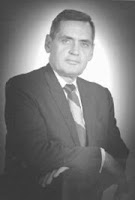
Scott in younger days
Scott served in the United States Merchant Marines during World War II, afterward working in advertising and journalism, although a Wikipedia entry says he worked in journalism in Virginia and California prior to entering the Merchant Marines. Regardless, this path led him to embark on a long career as a published author of various themes as diverse as the histories of the Ashland Oil and Black & Decker Companies, and the stories of Robespierre, James I, and John Brown the abolitionist.  All told, Scott published ten books along with numerous articles in many publications including the Los Angeles Times, San Diego Union, San Diego Tribune, Salisbury Review (London), Conservative Digest, and Human Events.  However, among conservatives, Scott was known for his own monthly publication, Otto Scott’s Compass, a “journal of contemporary culture.”  The latter had a considerable run of fifteen years, ending the year before his death.  One of Scott’s relatives aptly observed that he was “one of a great many Americans who are well-known to a special audience, but unknown to the nation at large.”2  In Scott’s case, his “special audience” was predominantly one of ultra conservative “Caucasians” with interests in the maintenance of the present order of the western world.

Capitalist Ideologue

Throughout his professional life, Scott made a living as both a businessman and as the chronicler of big business.  The anonymous author of the article Wikipedia about Scott notes that between 1954 and 1963, he held three vice-president posts in Globaltronix de Venezuala, Mohr Associates, and Becker, Scott & Associates.  He was also “assistant to the chair” at Ashland Oil Incorporated in the year 1968-69.  Even Scott’s family member acknowledges that he largely made a living “from his corporate biographies.”3  As a bona fide gatekeeper of the status quo, Scott was extremely critical of any real or perceived radicalism and liberal or left-oriented ideas, and was also opposed to any liberation movement that challenged what he upheld as the supremacy of the Christian west.  He was highly critical of the anti-Apartheid movement in the 20th century and bitterly attacked the abolitionist movement of the 19th century in historical terms.

Although Scott became a major didactic figure for ultra-conservatives in later decades, he had already influenced the conservative movement as an ideologue by the later 1960s.  Most notably, he is credited for inventing the phrase, “The Silent Majority,” a term made popular by Republican President Richard Nixon.  According to Wikipedia, Nixon apparently appropriated this phrase from a speech that Scott wrote for the CEO of Ashland Oil entitled, "The Silent Majority" (which was delivered to the Chicago Men's Club on May 23, 1968). 

Alliance with Rousas J. Rushdoony

J. R. Rushdoony
No doubt, Scott’s cachet was further enhanced when he allied himself with the ultra conservative Reformed theologian, Rousas J. Rushdoony, a marginal Calvinist intellectual who similarly influenced President Ronald Reagan’s political ideology.  The two ultra conservative thinkers chaired a radio program and Scott published regularly in Rushdoony’s magazine, The Chalcedon Report.4  Scott’s alliance with Rushdoony was significant for his future lionization among extreme Southern conservative Protestants, some of them neo-secessionists.  Scott, Rushdoony and their type despised the secular North as the vector of liberal abolitionist ideology, the forerunner—in their thinking—of present day liberalism and Left oriented politics and religion.  Scott is said to have had some kind of conversion experience after reading the four New Testament gospels in one night.  However, it is not clear if Scott ever had church affiliation until his final role as “scholar in residence" at the Tri-City Covenant Church in Somersworth, New Hampshire (1998-2004), “where he provided historical insight to the school and church staff and assisted in Sunday School instruction, high-school history, and Bible and economics courses.”5 

Scott and Reconstructionism

Tri-City Covenant Church is a congregation that follows the so-called Reconstructionist (also known as Theonomy or Dominionism) teachings of Rushdoony, Gary North, and others.6  Reconstructionists are like Libertarians with a Calvinistic theological and philosophical orientation, and are hostile toward liberal and Leftist politics.  Reconstructionists are generally distinguished by their belief that the Mosaic Law should be enforced as the law of the land.  For this reason, even conservative evangelicals find Reconstructionists problematic.  In 1996, the conservative Christian activist Ralph Reed wrote, "Reconstructionism is an authoritarian ideology that threatens the most basic civil liberties of a free and democratic society.”7  Richard J. Neuhaus thus appropriately describes Reconstructionism as a “bastard form of Calvinism contending that the American constitutional order must be replaced by a new order based on ‘Bible Law.’” Church historian Carl Trueman concludes that Rushdoony “was historically incompetent, probably racist” and—based upon his use of questionable sources, “probably unhinged” too.8
. . .one can understand why Scott was so embraced by Reconstructionists, especially since he shared their core white supremacist values.
In this light, one can understand why Scott was so embraced by Reconstructionists, especially since he shared their core white supremacist values.  Like Scott, Rushdoony and his colleagues have proven extremely sympathetic to the Confederacy in historical retrospect, just as they defended racist South Africa at the peak of the anti-Apartheid movement.  Anything that smacks of egalitarian or liberationist ideas is understood as rooted in godless ideology to Reconstructionists, and this was well suited to Otto Scott.  Rushdoony and his Chalcedon Foundation proved to be extremely supportive of white Southern nationalism, especially showing proud devotion to antebellum pro-slavery theology.  The Chalcedon Foundation allied with the Alabama-based League of the South in the 1990s, and Scott himself was the featured speaker at the League’s 1995 convention.  He even produced videos for the League dealing with their historical and political reinterpretations of the Civil War and slavery.9 According to the insightful Christian blog, Racist Churches, Scott allegedly pronounced regret over the increasing number of non-whites in congress and also supported racial profiling by authorities.  He uplifted the so-called Caucasian race as the most “essential to the continued progress of world humanity,” and disdained the removal of an interracial marriage ban in post-Apartheid South Africa.  It is also reported that Scott once stood at the grave of Thomas “Stonewall” Jackson in Virginia and declared that it marked “the end of southern civilization.”10 This depraved orientation clearly provides the basis for Scott’s malignant interpretation of John Brown.

A Word About Conservatives and John Brown

Whatever one’s political orientation, it is not a “given” of history that conservatives have categorically despised John Brown.  In fact, he has always had admirers along a range of conservative views.  Certainly John Brown studies was largely carried in the 20th century by two conservative researchers, Boyd Stutler and the Rev. Clarence Gee.  While Gee was probably the more socially thoughtful of the two, Stutler was a hard-nosed right-winger who disparaged the Civil Rights movement of the 1960s as being too extreme.   Notwithstanding this backwards view, Stutler recognized the essential rightness of Brown’s antislavery effort and admired his willingness to die to end human bondage in the United States.  Even “tricky” Richard Nixon, coming from a Quaker background, apparently held a soft spot in his heart for Old Brown. At the time of the United States Bicentennial in 1976, Nixon even made reference to Brown’s words.11  My point is not that the politics of men like Stutler were correct, or that their brand of conservatism was identical to Brown’s political outlook.  However, when it comes to John Brown, conservatism has never been represented by one opinion, and certainly not the opinion of right-wing neo-Confederates.  Furthermore, Stutler would hardly have approved of Scott’s narrative, so replete with political contempt and mean-spirited accusations of Brown and the abolitionist movement.

Scott, Malin, and John Brown
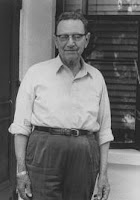
James C. Malin
(Kansas State Historical
Society
)
Scott’s primary source in his own writing is the work of James C. Malin, a Kansas scholar whose book, John Brown and the Legend of ’56, was probably the last significant scholarly effort to flagrantly discredit Brown. Louis Ruchames, editor of the quintessential collection, A John Brown Reader, called Malin “the foremost anti-Brown historian, who seems unable to forgive the North for having used force against Southern secession, or the Abolitionists for having taught that the abolition of slavery would be a step forward for American society, or the Negro for having believed that his welfare would be furthered by the forceful elimination of slavery.”12  Ruchames’ evaluation of Malin sounds quite similar to Otto Scott:

To Malin, minor errors of date or place committed by writers who have a high regard for Brown are frequently labeled deliberate falsehoods, while the errors of Brown-haters are simply unintentional blunders.  Very few anti-slavery leaders and writers emerge unscathed under Malin’s furious onslaught.  Typical of his method are his comments on Emerson, Thoreau, Parker and the other leaders of New England opinion, whom he contemptuously refers to as the “New England Transcendental Hierarchy, the self-appointed keepers not only of New England culture, but, according to their own estimates, of national civilization.”13

In retrospect, Scott not only appropriated Malin’s prejudiced hypothesis, but sought to extend it beyond Brown’s story in antebellum Kansas.  Meanwhile, serious scholars across the board, from conservative Stutler to left-leaning Louis Ruchames, had exposed Malin’s book as flawed and untrustworthy. While Malin’s effort had general value in presenting the hellish mayhem of the Kansas territory, his one-sided, ham-handed treatment of Brown and the anti-slavery side was warped and untrustworthy.14   Yet Scott saw Malin only as “a truly great American historian” and uncritically accepted his problematic book—which he lauded as “a classic of historic investigation and analysis”—because it suited his base politics.  Retrospectively, Scott continued to praised Malin for portraying Brown simply as a “multiple murderer and robber in the Kansas Territory,” even though these allegations were intentionally based upon a selective reading of pro-slavery sources.  In the short term, Malin’s John Brown and the Legend of ’56 gave ammunition to anti-Brown scholars, but soon the author was exposed, his work was discredited, and his scholarly reputation was duly diminished. Scott whined about this too, claiming that Malin’s only crime was that he had “outraged the Academy”—a ridiculous assertion, particularly because prominent historians in the mid-20th century were hardly warm toward abolitionism and John Brown.  To Otto Scott, Malin and his fetid book were the victims of academic “obloquy.”15  In reality, Malin’s work simply was too tainted and biased to be trustworthy.   To this day, no credible historian would use it without exercising extreme care—something that Scott definitely did not do.  In fact, he went on quite uncritically to make the greatest use of Malin’s propaganda for his own anti-Brown screed, The Secret Six: The Fool as Martyr.16  The identity of the “fool,” in Scott’s mind, is easy to surmise.

Scott’s “Sacred Fool Quartet”

Scott’s own treatment of John Brown the “fool as martyr” actually was third in his series known as “The Sacred Fool Quartet”—critical biographies about “extraordinary fools whose follies influenced the course of all our lives,” goes Scott’s claim.  “Without them, history would have been different, and our lives would today be lived along patterns beyond our powers to imagine.”17    Besides John Brown, Scott’s historical fool hunt targeted King James I of England, Maximilien Robespierre and the French Revolution, and President Woodrow Wilson.  Scott thought these historical figures were “sacred” in that society had supposedly conferred a “form of immortality” upon them “irrespective of character.”18  Having fed from Malin’s poisoned plate, Scott’s anti-Brown work thus extended the theme in blanket condemnation of the abolitionist movement, with the particular intention of blaming them for the ruin that befell the South in the Civil War.  Scott thus opined: “The costs of Abolitionist virtue ran high.  Officially the record is 621,000 dead,” he concluded of the Civil War death toll.19 It is difficult to imagine anyone attributing the expansive deaths resulting from the Civil War to the abolition movement without thinking the writer must be a revivified slave master.  But this represents the kind of mind and spirit that animated Otto Scott.

A Publishing Disappointment

Interestingly, the first edition of Scott’s anti-Brown book was published by Times Books, the publishing arm of the New York Times, in 1979.  Although the book was smuggled to press, Scott’s Secret Six nearly proved a Trojan horse to the “Old Gray Lady.”  Certainly, Times Books was an unlikely home for Otto Scott’s anti-liberal screed, except that he had an inside connection with Tom Lipscomb, a business associate who had become the head of the press.  The book was hesitantly published, but it grated upon the legendary Times executive, Sidney Gruson, who rightly observed that it “lowered the tone” of the company.  Fearing that his opus would get buried, Scott pulled the rights of his book, bought back the remaining copies, and donated them to his friend Rushdoony.  Fortunately for Scott, there was sufficient interest and money in the South, and the book was republished eight years later by the Foundation for American Education in South Carolina, possibly a Klan-related organization.  Although Scott lamented that his book had nearly been “murdered” by the “Establishment,” The Secret Six was much more viable than he portrayed.20  Scott may not have had liberal money behind him, but he had right-wing support, especially in a willing audience among neo-Confederates and Reconstructionists.  The book was finally published under another label in 1993, which seems to have been Scott’s own imprint.21

The Legacy of Scott’s Secret Six

Otto Scott died in 2006, but his book continues to feed the same counter-establishment of radical right-wingers, neo-Confederates, and Reconstructionists.  For this audience, The Secret Six is taken as definitive and quoted by unknowing bigots as if it were the last word in historical terms.  Scott undoubtedly knew that he had made a niche for himself with his anti-Brown book; his other “fool” books are extant but rarely mentioned.  In The Secret Six, Scott took the Southern screed to a sophisticated and polished level of argument.  By cynically portraying Brown as a deluded killer in collaboration with liberal New England elites and other subversive figures, Scott affirms the foundational sentiments of neo-Confederates and ultra-conservatives who deeply despise liberalism in government and society, and who resent the national and global changes that are challenging traditional white supremacy in state and church.

It is not my intention to do a book review and in this piece I have preferred to use Scott’s subsequent reflections as published in Southern Partisan, which present his essential argument about Brown and abolitionism as well as background to his research and the publication of the book.  However, there are a couple of points that need to be made in highlighting the fundamental errors of his interpretation. 
Scott demonizes Brown over against the opinion of every credible biographer over the past century.
First, Scott’s bibliography belies the lack of fairness that defines his work, particularly regarding Brown.  Scott demonizes Brown over against the opinion of every credible biographer over the past century.  His narrative not only impugns Brown, but inherently accuses every scholar (including myself) of being a liar and false propagandist by our presentations vis a vis the historical record.  If Scott is correct in his profile of Brown, then Villard, Oates, Stavis, Boyer, Yours Truly, Reynolds, Carton, McGlone, and Horwitz have misread the facts to a significant degree.  Not that all of us agree on every point, and some of us have considerable differences about the Old Man.  Yet none of us have presented Brown and the abolitionist movement in the manner insisted upon by Otto Scott. 

Equally important if not more so, Scott’s work is both selective and derivative.  Like Robert Penn Warren before him, Scott only mined the most negative assertions of Oswald Villard, and otherwise ignored the more positive and balanced aspects of biographers like Villard, Boyer, and Oates.  Otherwise, his work offers nothing new, original, or based on primary research.  From Stutler, Gee, Edwin Cotter, and Tom Vince to Jean Libby, Scott Wolfe, and others (including me), those who have studied Brown extensively over time and in great depth simply do not recognize the John Brown of Scott’s rendering.   Far from being a historical portrayal, Scott’s “fool” is a straw man, a self-serving caricature that suits his prejudices and privileges his political agenda.

Third, Scott diminishes people of integrity who were Brown’s allies and supporters during and after his death.  Besides his obvious criticisms of the “Secret Six” and other “liberal” abolitionist clergymen, Scott essentially calls Frederick Douglass a liar—“disingenuous”—in his testimony about Brown.22

Fourth, Scott’s argument paints the crisis between abolitionists and the South with such broad brushstrokes that he obscures the fact that Christians across the theological spectrum were opposed to chattel slavery and saw it as a great sin.  While it is true that many leading abolitionists were “liberal” clergymen, there was no lack of stridently evangelical and even Calvinistic anti-slavery people in the North too.  The abolition movement may have had a preponderance of “liberals” in Scott’s terms, but the anti-slavery and abolitionist premises were not essentially based upon heterodoxy.  For instance, the counterparts of Reformed Presbyterian slaveholders in the South were the Covenanted Reformed Presbyterians, a movement descended from the Scottish Protestant Reformation.  The “Covenanters” were fervent antislavery people and argued against slavery explicitly from the Bible and the Calvinist tradition.  John Brown himself was a traditional Calvinist, a point that Scott never properly or fairly assessed because his only interest was in presenting him as a murderous “fool” in cahoots with Northern liberal heretics. Brown was “religious,” Scott says, but certainly not Christian.  Even in his death, Brown died like every dark pagan “selected for holy execution” in places like the “Orient, Pacific, Africa, India and other parts, because the gods demanded sacrifices—for the good of the majority.”23

Finally, Scott’s viewpoint necessarily plays down and denies the evil of chattel slavery and makes the slaveholding South a victim of Northern aggression.  In his understanding, it was antislavery people who were acting out “with raging demonstrations against the Fugitive Slave Act” in the North, just as it was the “initial exertions of old John Brown” that caused Kansas rhetoric to shift into violence.  The Northern heresy “led to the Civil War” while noble Christian Southerners “watched the Northern paroxysms with fear and horror,” increasingly convinced they were to be massacred.24  There is no sense of the aggression and determination of the South to expand slavery by any means necessary.  There is no admission that Southern terrorism was already underway in Kansas before John Brown came in answer to a distress call from his family in the territory.  There is no acknowledgment that black people in the North, free and fugitive, were outraged and terrorized by the Fugitive Slave Law, and that many patient Northerners felt violated and abused by its requirements.  Nor is there any sense of the guilt and hypocrisy of the Christian South, feeding off the sweat and blood of their hapless black chattel.  All Scott understood of the antebellum drama of abolition was that it was a grand liberal heresy foisted upon the South that “resulted in a long, terrible [and avoidable] war and punitive peace.”  All that mattered to him was that abolitionists had so skewed the world by their doctrines that even future whites, such as white Afrikaners during South African Apartheid, would suffer as a result, just as anti-white terrorism was descending upon the world because of the “boomeranging back” of the abolitionist heresy.25

Epilogue: “Eternal Reality”?

After Scott’s death, one of his family members recalled that although “his work has proceeded without fanfare, it had not gone unnoticed.” This is true enough.  His influence remains real in the marginal subcultures of neo-Confederacy and reactionary right-wing Christianity.  His work on John Brown has not gone unnoticed either, since it remains authoritative and usable for these audiences.  However, Scott’s work lacks the substance of truth and integrity.  He not only writes from a standpoint of error, but also from one of tragic self-deception.  Scott was a man who gave the whole of his life to twisting history to benefit corporations, slaveholders, and alleged white racial superiority.  Gifted with doubtless ability and intelligence, yet his intelligence was wasted on the pride of a fallen slave empire, and every gesture of accusation he pointed at others will come back to rest upon his legacy. 
Otto Scott lived on the wrong side of history and left a legacy of white racist pride and denial.
Otto Scott lived on the wrong side of history and left a legacy of white racist pride and denial. As a historian, he had real ability and sensibility, even a sense of obligation to time and eternity.  Yet often these make the worst kinds of people when they align themselves to the side of oppression.  Were he merely a stupid reactionary or a paid literary assassin, Scott would have been easy to ignore.  He once remarked, “I do not regard the past as dead. On the contrary, I regard the past and the present and even the future as part of an eternal reality.”  He concluded that his generation faced the same tests encountered by former generations.  “All I do is remind my contemporaries that Eternity watches us forever,” Scott concluded.26  It is unfortunate that a man with such a broad scope did not learn from the failure of preceding generations.  John Brown was himself quite aware of that “eternal reality,” and could have taught Otto Scott a few lessons had he been willing to learn from history.  But instead of deploring those sins, he personified them as an apologist, and even magnified them by making wrong into right, and right into wrong.  Like Haman of old, the fool who erects a gallows for the just may find himself hanged on a scaffold of his own error. 

So hangs Otto Scott, the fool as biographer.

* I would like to thank the scholar Edward H. Sebesta, who provided me with some copies of Scott’s contributions to neo-Confederate publications, especially the Southern Partisan.  Sebesta’s blog, Anti-Neo-Confederate is found on the web at: http://newtknight.blogspot.com/.  He is also the co-editor of Neo-Confederacy: A Critical Introduction (University of Texas Press, 2008) http://www.utexas.edu/utpress/excerpts/exhagneo.html and co-editor of The Confederate and Neo-Confederate Reader (University of Mississippi Press) http://www.upress.state.ms.us/books/1338.

Notes

     1 “A Giant is Gone,” Southern Partisan xxv:i (May 2006): 11.
     2 “Otto Joseph Scott,” Wikipedia.  Retrieved on 12 Mar. 2012 from: http://en.wikipedia.org/wiki/Otto_Scott#cite_note-1; Phillipa Scott-Girardi, “Otto Scott,1919–2006,” Sobran’s Forum on line [originally published in Sobran’s, Apr.-May 2012, p. 12].  Retrieved on 12 Mar. 2012 from: http://www.sobran.com/articles/forum/otto_scott.shtml.  Also see “Otto Joseph Scott, May 26, 1918 – May 5, 2006” (Obituary).  Bonney-Watson (Seattle, Wash.).  Retrieved on 12 Mar. 2012 from: http://bonneywatson.com/obituaries/detail.html?id=1857.
     3 Ibid.
     4 “Otto Joseph Scott”; “A Giant is Gone.” Also see, Scott-Girardi, “Otto Scott, 1919-2006.”
     5 Scott-Girardi, “Otto Scott,1919–2006.”
     6 See Tri-City Covenant Church website (Somersworth, NH) at: http://www.tccc-tcca.org/.  Note that the sources of the church’s position paper on “Dominion & Work” are all renowned Reconstructionist scholars.
     7 Richard John Neuhaus, “Ralph Reed’s Real Agenda,” First Things (Oct. 1996).  Retrieved on 12 Mar. 2012 from: http://www.firstthings.com/article/2007/11/006-ralph-reeds-real-agenda-5.
     8 Neuhaus, “Ralph Reed’s Real Agenda”; Carl Trueman, “Rushdoony once again—for the last time,” Reformation 21 blog [Alliance for Confessing Evangelicals], 31 Dec. 2006.  Retrieved on 15 Mar. 2012 from: http://www.reformation21.org/blog/2006/12/rushdoony-once-again-for-the-l.php.
     9 Edward H. Sebesta and Euan Hague, “The U.S. Civil War as a Theological War: Confederate Christian Nationalism and the League of the South,” Canadian Review of American Studies 32:3 (2002).
     10 “Otto Scott,” Racist Churches blog.  Retrieved on 12 Mar. 2012 from: http://racistchurches.wordpress.com/2007/06/13/otto-scott/.
     11  See Louis A. DeCaro, Jr., John Brown: The Man Who Lived; Essays in Honor of the Harper’s Ferry Raid Sesquicentennial 1859-2009 (New York: Lulu, 2009), pp. 15-16.
     12  Louis Ruchames, ed.  A John Brown Reader (New York: Abelard-Schuman, 1959), pp. 14-15.
     13  Ibid.
     14 “Malin took much of his source material from the anti-Brown papers and records.”  Boyd B. Stutler to Clarence S. Gee, 10 July 1953, p. 2, in Stutler-Gee correspondence, Hudson Library and Historical Society, Hudson, Ohio; “The book contains a lot of good material—but it also contains too much of biased opinion. . . .  I think [Malin] violated every rule of historical method in his zeal to establish his legend, and that there are strained interpretations of some of the material he used.” Stutler to Gee, 25 Aug. 1951, p. 1, idem. 
     15 Otto Scott, “The Return of John Brown and the Secret Six,” Southern Partisan (Spring 1988), pp. 21 and 23.
     16 The final version of the book is published under the title, The Secret Six: John Brown and the Abolitionist Movement. See note 20 below.
     17 Per the book’s description on Amazon.com.  Retrieved on 16 Mar. 2012 from: http://www.amazon.com/James-I-Fool-as-King/dp/0884051234.
     18 Scott, “The Return of John Brown and the Secret Six,” p. 23.
     19 Ibid., 22.
     20 Ibid., 23-24.
     21 A routine search on the internet for Uncommon Books shows no other author or book published by Uncommon Books, except for another essay by Scott called “The Church and Modern Culture” (1992).
     22 Scott, The Secret Six, n. 10, p. 345.
     23 Otto J. Scott, “Transcendentalism: The New England Heresy,” Southern Partisan (Spring 1982), p. 20.
     24 Ibid., 19 and 20.
     25 Ibid., 21.
     26 Scott-Girardi, “Otto Scott, 1919-2006.”